Local
Why AC Units Near Venice Beach Fail Early: Salt-Air Corrosion
Condensers near the Gulf can crumble years ahead of inland units. Here is what salt actually does to your AC and the protection steps that make a real difference.
4 min read
22 five-star Google reviews · Owner-operated in Venice, FL
Salt-Air Corrosion Coil Protection · Venice, FL
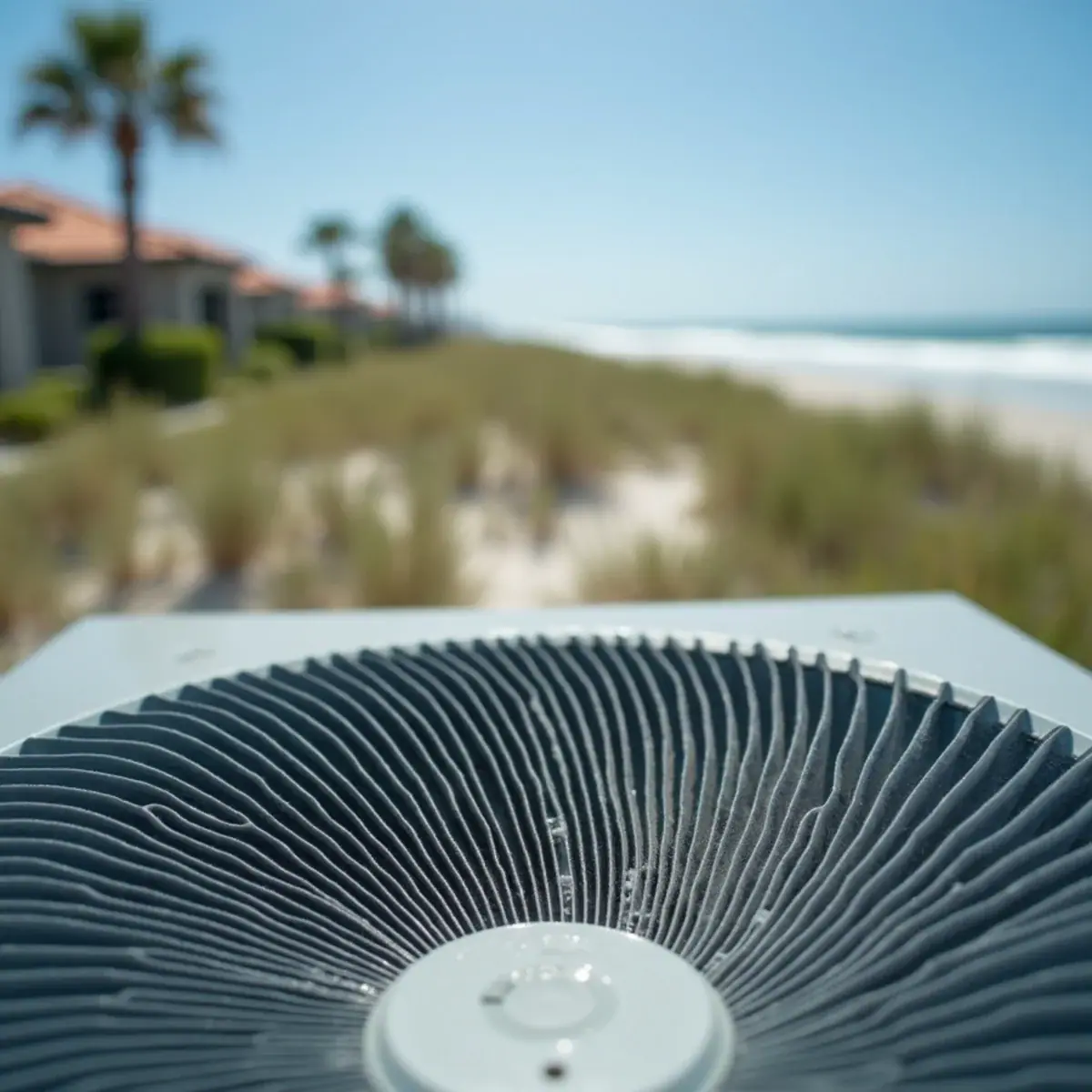
Salt spray settles on your condenser every day and quietly eats the aluminum fins. We slow that damage down and help you plan for it.
Coastal AC coil corrosion in Venice, FL is salt spray slowly eating the aluminum fins, copper tubes and electrical terminals of your outdoor unit, and it can't be stopped, only slowed. Brothers Services Cooling & Heating grades the damage with photos, cleans salt out of the coil the right way, protects sound metal with an anti-corrosion coating, and tells you plainly when a coil is too far gone to be worth treating. Homes on the keys and along the bays get a rinse schedule built around how close they sit to the water.
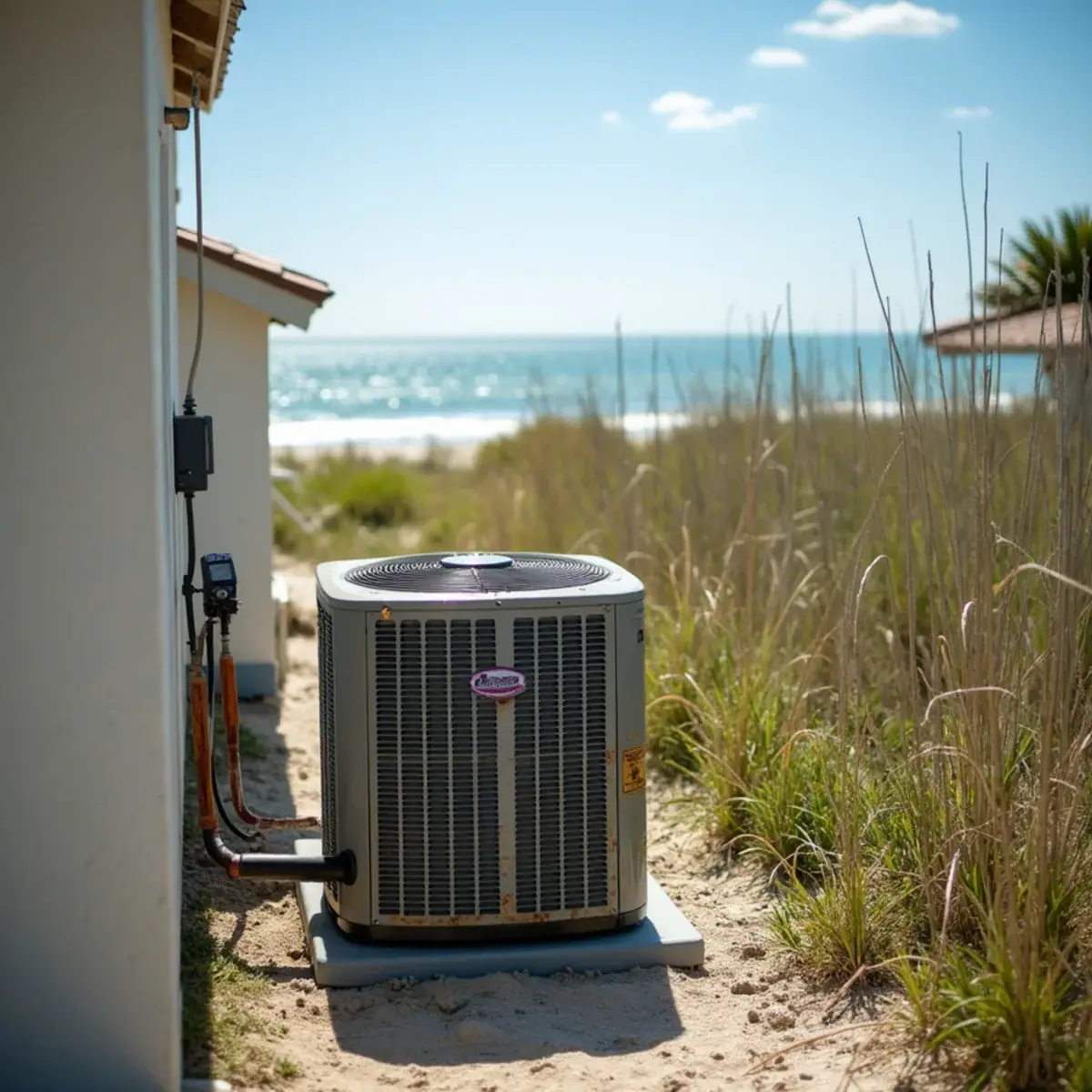
If you live on the islands, near the Venice beaches or within view of the Intracoastal or Lemon Bay, your outdoor unit breathes salty air around the clock. Onshore breezes leave salt crystals on the condenser fins that pull moisture from the air and keep the metal damp. Within a few summers the thin aluminum turns chalky, then brittle, then crumbles, and the unit can no longer shed heat.
Coastal AC coil corrosion is a fact of life for Venice, FL homeowners near the water, noticed or not. Brothers Services Cooling & Heating catches it early, cleans and rinses coils properly, applies protective coatings where they make sense and tells you honestly when a coil is past saving. Goran would rather show you a close-up photo of your fins than ask you to take his word for it.
Warning signs
Walk around your condenser and look closely. These signs tell us how far corrosion has progressed.
That chalky residue is aluminum oxide mixed with salt. Early on it brushes off; left alone, it marks metal being consumed underneath.
Press lightly on a corroded section and the fins may crumble away. Pitting often starts where fins meet the copper tubes, weakening the bond that carries heat, so capacity drops even before a leak appears.
Steel panels and fasteners show orange rust bleeding through paint, especially along the bottom edge where salty water collects. Seized screws make every future repair slower.
Green or white buildup on contactor terminals, capacitor posts and wire lugs creates resistance and heat. A unit that trips or refuses to start at random may simply have corroded connections.
Degraded fins can't reject heat, so head pressure and run times climb. Eventually galvanic corrosion where aluminum meets copper eats through the tube wall, and repair options narrow quickly.
What’s included
Every salt-air visit follows the same checklist, so you can put this year's photos next to last year's and see whether the plan is working.
Photos of the fins, the fin-to-tube joints, the base pan and the electrical compartment, with a plain rating: surface salt, early oxidation, active pitting or past saving.
Head pressure, the condenser temperature split and amp draw show whether corrosion is already costing capacity, something a coil can hide behind a clean-looking face.
When access allows, the fan top comes off so the rinse pushes salt out through the coil instead of driving it deeper from the outside.
Crusted lugs and terminals are cleaned or replaced, and exposed connections get a protective treatment where it's appropriate, because corrosion causes random no-start calls long before it causes leaks.
An anti-corrosion coating goes on a clean, dry coil whose metal is still sound. If yours doesn't qualify, you'll hear that before you pay for it.
Your rinse interval, when the next professional cleaning is due and whether a coastal-rated unit belongs in your replacement budget, written down so you and any future technician can follow it.
How we work
Protecting a beach-area condenser comes down to removing salt regularly and giving the metal a barrier.
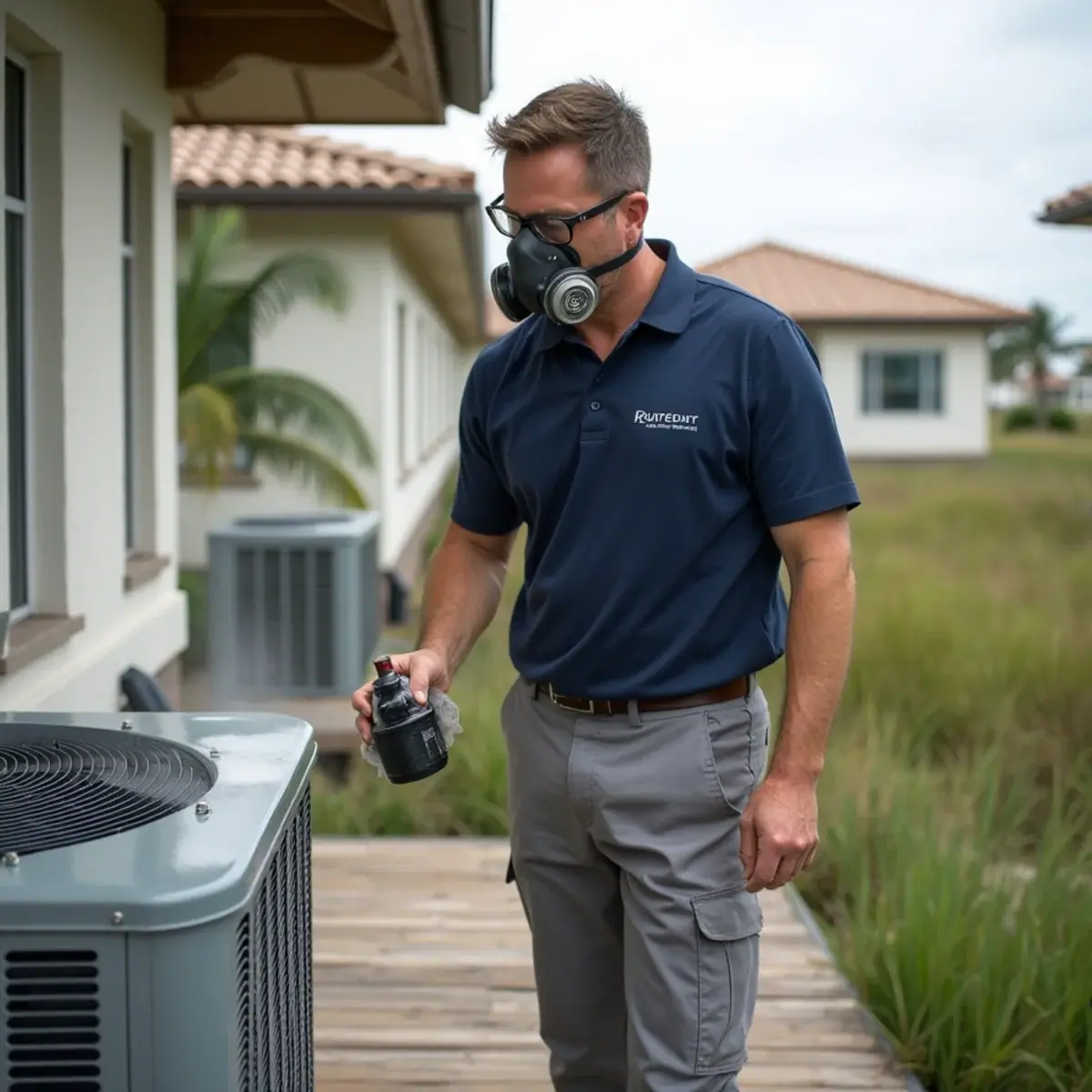
We check fin condition, cabinet rust, electrical terminals and operating pressures, and photograph problem areas so you see exactly what we see.
With power off at the disconnect, we apply a coil-safe cleaner, then a low-pressure fresh-water rinse from the inside out that pushes salt back the way it came. Pressure washers flatten fins, so we never use them.
A fin comb reopens bent sections, and we clean or replace corroded terminals, lugs and hardware.
On a clean, dry coil in reasonable shape, a corrosion-inhibiting coating adds a barrier between salt and metal. It works best on newer coils, and we'll tell you if yours is too far gone to benefit.
We suggest an interval based on your distance from the water and which way the unit faces, and show you how to do a gentle garden-hose rinse between visits.
Honest pricing
Scope depends on your exposure and on how much damage has already happened.
We quote the cleaning, coating and any hardware repairs in writing before starting, so you choose exactly what gets done.
Salt exposure is heaviest on the keys. Homes on Manasota Key and Siesta Key often have condensers a short walk from the surf, sometimes on raised platforms that catch the wind head-on. On the mainland, canal lots in Englewood and streets near the Venice beaches see plenty of salt too, especially on west-facing units. For these homes, professional cleaning a few times a year plus a monthly fresh-water rinse is a sensible target.
When replacement time comes, waterfront homes have better choices than a standard condenser: factory-coated coils, all-aluminum coil designs that avoid copper-to-aluminum contact, powder-coated cabinets and corrosion-resistant hardware. They cost more upfront but can meaningfully extend service life near salt water. Placement matters too; a unit on the side of the house away from direct onshore wind collects less salt. Our AC installation process weighs these options against clearances and the anchoring rules covered on our hurricane AC service page.
Routine AC maintenance is the backbone of any salt-air plan, and once corrosion has opened a leak, refrigerant leak repair is the next step. For a closer look at why beach units wear out early, read salt-air AC corrosion near Venice Beach.
Why Brothers Services
Goran does the inspection himself and shares the close-ups, so a seasonal owner who's up north sees the same fins we do before approving anything.
We treat corrosion as a condition to manage, not an automatic replacement. Our 22 five-star Google reviews keep coming back to honesty and fair prices, and a chalky coil gets the same treatment.
When replacement does win, our Florida Certified A/C Contractor (CAC) license lets us handle the permit, wind-rated tie-downs and a coastal-rated equipment choice under one written quote.
Free estimates, a 24/7 phone line at (831) 461-3437, and payment by card, Zelle, PayPal or Cash App make it simple to book a cleaning before you head north or right after you get back.
Real customers
FAQ
For homes within sight of the Gulf or a bay, a gentle fresh-water rinse about once a month during the windy months helps a lot, with professional cleaning a few times a year. Farther inland, a seasonal rinse is usually enough. Shut off power at the disconnect first and use a garden hose, never a pressure washer.
Not really. Coatings protect metal that's still sound; they can't rebuild fins that have turned to powder or seal thinning tube walls. On a coil with light surface oxidation, cleaning and coating can buy real time. On a coil that's flaking apart, replacement is usually the honest answer, and we'll share photos so you can judge.
If you live on a barrier island or directly on the water, usually yes. Standard condensers in heavy salt exposure often wear out noticeably sooner than inland units, and coated coils and better cabinets tend to pay back through longer service life. A few miles inland, a standard unit with good maintenance is often fine.
Less directly, since the indoor coil sits inside the house. Still, salty, humid air leaking into a garage or closet air handler can contribute to corrosion. Keeping mechanical closet doors closed, sealing duct leaks and holding indoor humidity in check all help protect the indoor side of the system.
It depends on the product, how clean the coil was when the coating went on and how much salt the unit takes every day. Gulf-front exposure wears any coating faster than a spot a mile inland. Rather than promise a number of years, we check the coating at each maintenance visit and touch it up or recoat when bare, chalky patches start showing on the fins again.
Often not in full. Many manufacturer warranties limit or exclude corrosion damage, and some treat installations close to salt water differently. Read the corrosion and coastal clauses before you buy, and keep dated records of coil cleaning, because proof of maintenance can matter if you ever file a claim. If you're unsure where to look, we'll help you find the clause in your paperwork.
Sometimes. If the compressor, fan motor and cabinet are healthy and a replacement coil is still available for your model, a coil swap can make sense. On an older R-22 unit, or one where the base pan and cabinet have rusted through as well, the math usually favors replacement. We price both options in writing so you can compare them side by side.
Page last reviewed by the Brothers Services team.
A thorough Florida tune-up with coil rinse, drain flush, and electrical and refrigerant checks that catches weak parts before August does.
AC Maintenance in VeniceIce on the lines or a system that needs a top-off every summer? We find the leak, fix it and give honest R-22 and R-410A advice.
Refrigerant Leak & Frozen Coil Repair in VeniceA new AC or heat pump sized by real load calculation, permitted, tied down for hurricane season and tested before we leave.
AC Installation & Replacement in VeniceLocal
Condensers near the Gulf can crumble years ahead of inland units. Here is what salt actually does to your AC and the protection steps that make a real difference.
4 min read
Prevention
Most Florida AC failures give warning signs weeks ahead. This month-by-month checklist shows what a homeowner can handle, what needs a technician, and why each task matters in Gulf Coast heat.
5 min read
Salt exposure is heaviest where the Gulf is your neighbor: Casey Key and waterfront Nokomis, Manasota Key, Boca Grande on Gasparilla Island, and the Manatee County beaches of Anna Maria and Longboat Key. Bayfront and canal homes in South Venice and along Lemon Bay collect salt too, just more slowly. We treat coastal coil corrosion across all of them from our Venice base, and island calls are scheduled by bridge and route, so you'll get honest timing on the phone.
Venice & Sarasota County HVAC
Call Brothers Services for same-day AC repair, honest recommendations and a written price before we start.
Brothers Services Cooling & Heating · 107 Woodrose Way, Venice, FL 34293 · (831) 461-3437