Local
Why AC Units Near Venice Beach Fail Early: Salt-Air Corrosion
Condensers near the Gulf can crumble years ahead of inland units. Here is what salt actually does to your AC and the protection steps that make a real difference.
Quick answer
Salt air shortens AC life near Venice Beach because chloride-laden spray keeps aluminum fins damp, pits them and eats the bond where copper tubes meet aluminum fins. The coil loses heat transfer, the compressor works harder and pinhole leaks follow. Coated coils, gentle freshwater rinsing and stainless hardware slow the corrosion; they can't reverse it.
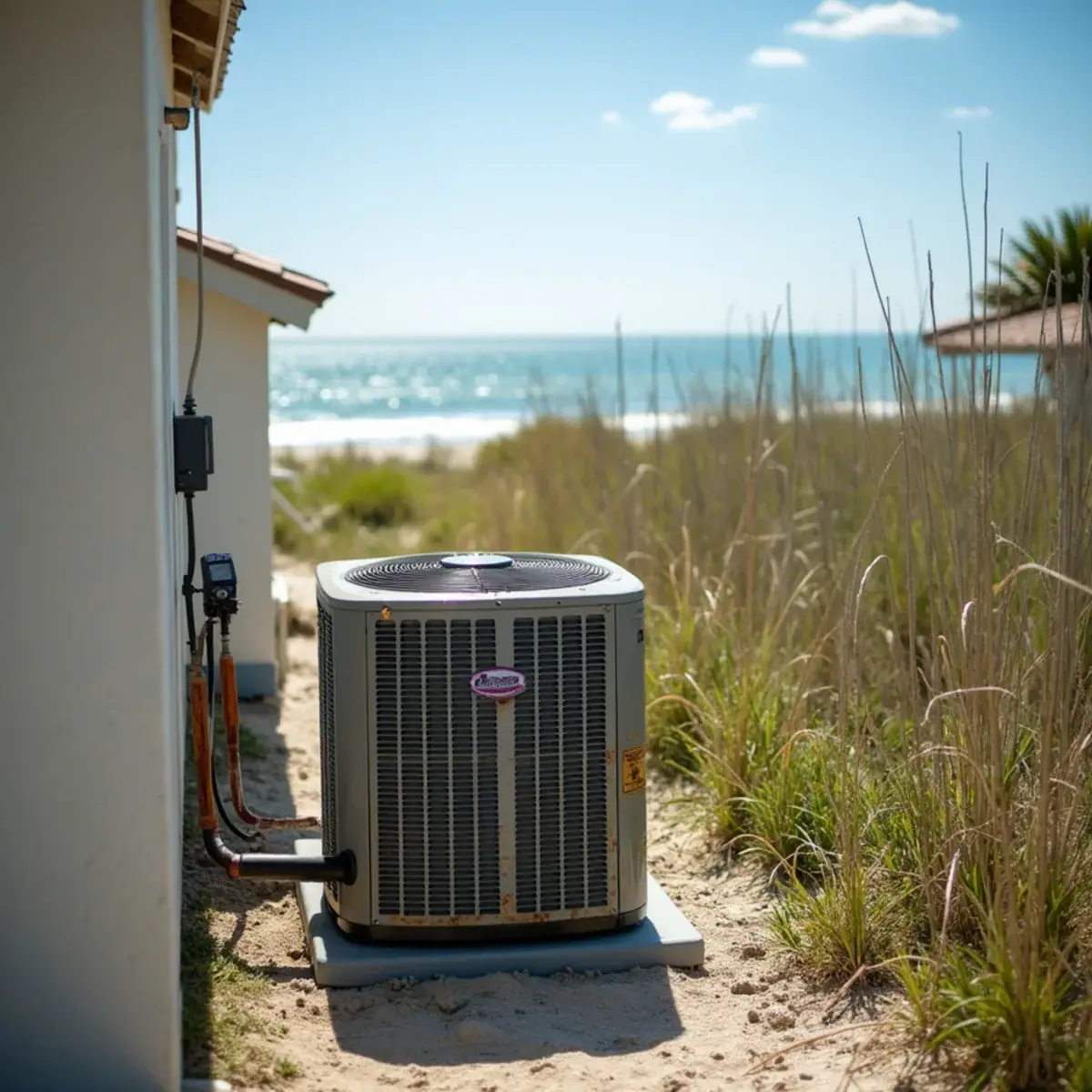
Run a finger across the fins of an AC condenser a few blocks from Venice Beach and sometimes they turn to gray powder. That is not dirt. It is aluminum that salt air has eaten through, and it is the main reason coastal units give up years ahead of identical equipment installed 10 miles inland. Salt corrosion is slow, quiet and mostly invisible until efficiency drops or a leak appears, which is exactly why it is worth understanding before it costs you a system.
What salt air does to an outdoor unit
Aluminum fin pitting
Onshore breezes carry fine salt spray that settles on everything, including the thin aluminum fins wrapped around your condenser's tubing. Salt pulls moisture from humid air, so the fins stay damp with a chloride film for most of the year. Chlorides break down aluminum's protective oxide layer and start pitting. As fins thin and flake, they lose contact with the tubes, heat transfer drops, head pressure rises and the compressor works harder on every cycle.
Galvanic corrosion where copper meets aluminum
Most coils use copper tubing with aluminum fins. Put two dissimilar metals together, add salt water as an electrolyte, and you have a small battery. Aluminum is the sacrificial metal, so it corrodes fastest right where it touches copper. That bond is what moves heat, and once it fails the coil's capacity drops even if the fins look intact from a distance. In advanced cases the corrosion reaches the tubes and joints and becomes a refrigerant leak.
Everything else in the cabinet
Salt also works on contactor terminals, capacitor connections, cabinet screws, fan motor shafts and hurricane tie-down hardware. A pitted contactor or corroded wire lug causes the intermittent no-cool calls that seem to have no pattern.
Warning signs your unit is losing the fight
- Fins that flake, crumble or leave white or gray powder on your fingers
- Rust streaks on the cabinet, base pan or fasteners
- Longer run times and a higher electric bill with no change in thermostat habits
- Green or white crust on electrical connections inside the service panel
- Oily spots on the coil, which often mark a refrigerant leak
- A system that cools fine in spring but struggles in the August heat
Distance from the water changes the math
| Location | Exposure | Protection priority |
|---|---|---|
| Gulf-front or barrier island | Constant spray and wind-driven salt | Coated coil at install, frequent rinsing, stainless hardware |
| Within about a mile of the beach | Regular salt deposits, worse after storms | Coated coil strongly advised, rinse every few months |
| Bayfront or canal lot | Moderate, depending on wind and water | Rinse schedule and yearly coil inspection |
| Inland neighborhoods | Low salt; pollen, dust and irrigation are bigger issues | Standard maintenance |
On the barrier islands the exposure is at its worst. On Manasota Key, homes sit between the Gulf and Lemon Bay, so condensers take salt from both sides. On Siesta Key, many units sit on condo rooftops or elevated platforms where nothing blocks the wind. In both places we plan for corrosion from day one rather than reacting to it later.
Protection that actually works
Coated coils
Several manufacturers offer condensers with factory-applied corrosion-resistant coatings, and field-applied coatings can be added to a clean, sound coil. A coating is a barrier, not armor, so it works best on a new or nearly new coil. Applied over fins that are already pitting, it mostly seals in the damage. Our salt-air corrosion coil protection service covers coating selection, application and follow-up.
Coil construction: copper-and-aluminum vs. all-aluminum
Coastal buyers should also ask what the coil is made of. A traditional coil pairs copper tubes with aluminum fins, which sets up the galvanic cell described above. Some manufacturers now build condensers with all-aluminum coils, often a flat microchannel design, partly to remove that copper-aluminum junction. The trade-off is repairability: a leak in a microchannel coil usually means replacing the coil rather than brazing a joint. Neither design is salt-proof. Coil material, coating, placement and rinsing still work as a package, and the warranty's corrosion wording matters as much as the brochure.
A freshwater rinse schedule
- Turn the system off at the thermostat and the outdoor disconnect.
- Use a garden hose with gentle pressure, never a pressure washer, which folds fins flat.
- Rinse from the top down, and from the inside out when the fan grille can be safely removed.
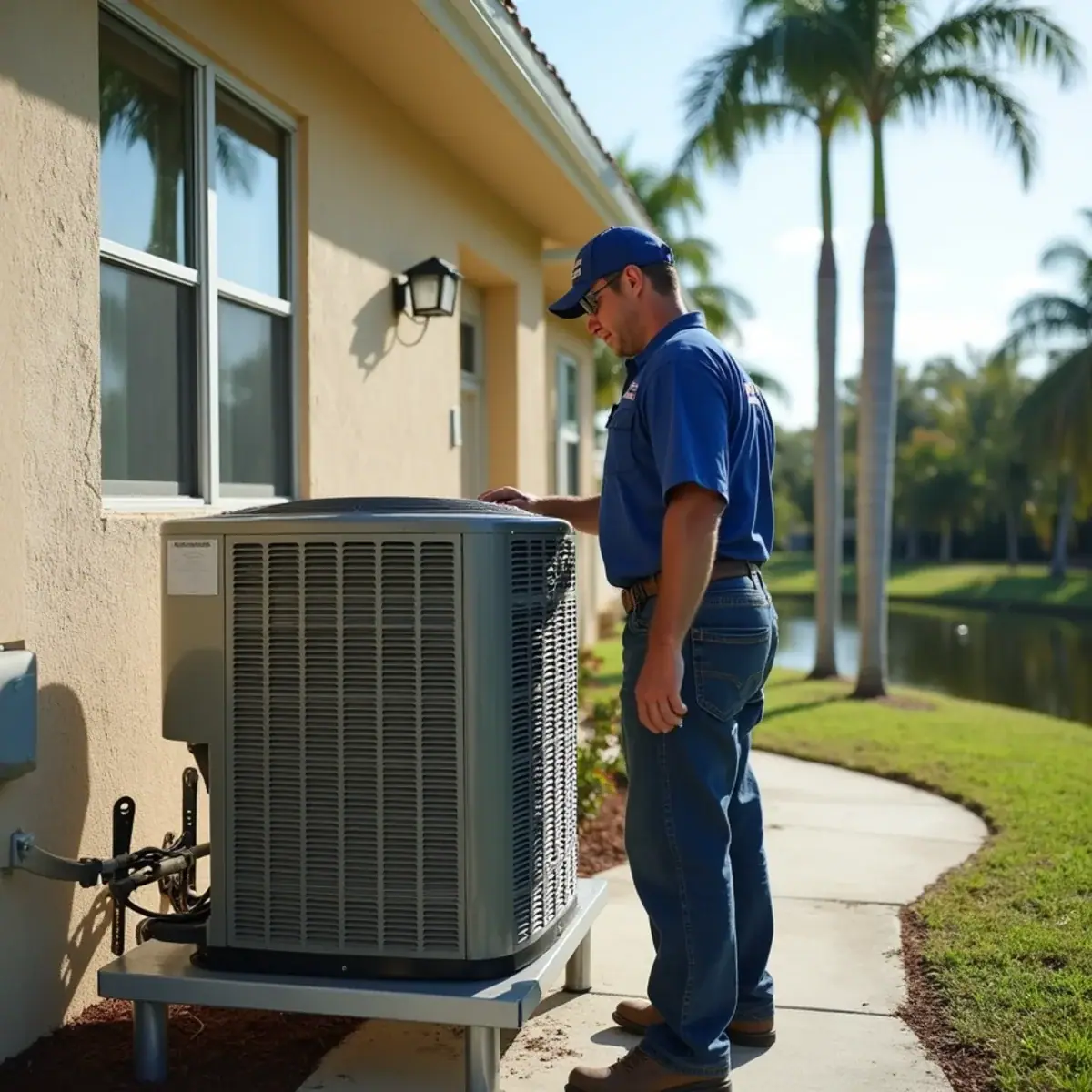
- Rinse after big onshore wind events and tropical storms, not just on a calendar.
- Let it drip dry for a few minutes before restoring power.
Smarter placement and hardware
When a unit is replaced or relocated, putting it on the side of the house sheltered from the prevailing Gulf breeze helps, as long as there is still room for airflow and service. Keep irrigation heads from spraying the coil, since well water adds its own mineral staining. Use stainless or coated fasteners for the pad, stand and wind-rated tie-downs that the Florida Building Code requires. For new systems, we factor all of this into AC installation near the coast instead of copying whatever the last installer did.
Repair, protect or replace?
If the fins are sound and the unit is fairly young, clean it, coat it and keep up the rinsing. If the fins crumble when touched and the coil has started leaking, a coating won't bring it back. At that point it comes down to coil replacement versus a new matched system, and on an older unit, especially an R-22 unit, replacement usually wins. Twice-a-year AC maintenance is when we catch corrosion early enough to still have options.
How we judge a salt-damaged condenser on a coastal call
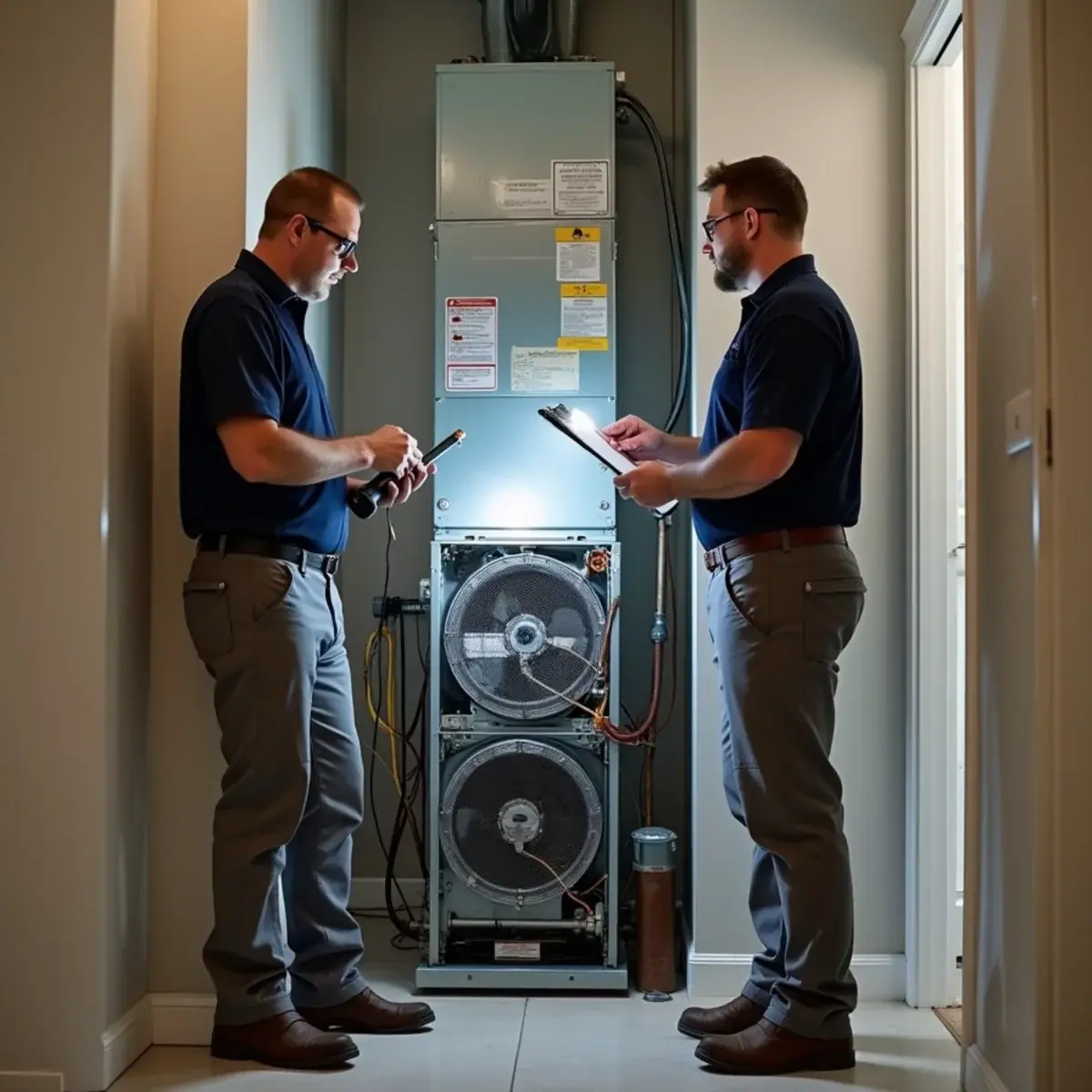
Corrosion rarely spreads evenly, so we don't grade a coastal condenser from one glance at the side you see from the driveway. On a typical call near the beach or on a key, the inspection goes like this:
- Windward face and bottom rows first. The side facing the Gulf breeze and the lowest few inches of coil, where salty rinse water and debris sit, almost always go first. A gentle press on the fins there tells us more than the sheltered faces do.
- Light through the coil. A flashlight held inside the cabinet shows gaps where fins have dropped away, even when the outer surface still looks furry and intact.
- Head pressure against conditions. A coil that has lost its fin-to-tube bond runs hotter than it should for the outdoor temperature. We compare the condensing temperature with what that unit should see on a clean coil, which separates "dirty" from "dying".
- Voltage drop across the contactor. Salt-crusted terminals add resistance that heats the connection and stresses the compressor, and a meter finds it before it fails.
The mistake we see most often is well-meant cleaning: acid-based coil cleaners or a pressure washer used on a coastal coil. Both strip the aluminum that salt has already thinned, and a coil can go from marginal to leaking in a single season. Plain water at hose pressure, or a cleaner labeled safe for aluminum, is all a condenser near the Gulf should ever get.
Get a coastal coil check
If your home is within sight or smell of the Gulf, have Brothers Services Cooling & Heating look at the condenser before hurricane season or after the next big blow. Call (831) 461-3437 or request a quote online.
FAQ
Common questions
How often should I rinse my AC condenser if I live near the beach?
For Gulf-front and barrier island homes, a gentle freshwater rinse every month or two is reasonable, plus after any strong onshore wind or tropical storm. Homes within about a mile of the beach can usually rinse every few months. Always shut off power first and use low hose pressure. A pressure washer bends the fins and does more harm than the salt.
Is a coated coil worth it for a home on Manasota Key or Siesta Key?
In most cases, yes. Barrier island condensers take constant salt exposure, and a corrosion-resistant coating slows fin pitting and galvanic corrosion at the copper-aluminum bond. The coating works best when applied at installation or while the coil is still clean and sound. Pair it with regular rinsing and stainless hardware for the best results.
Can a corroded condenser coil be repaired?
Small leaks at accessible joints can sometimes be repaired, but a coil with widespread fin loss and pitting is near the end of its life. Patching one pinhole often exposes the next. We check the whole coil, the refrigerant charge and the compressor before recommending anything, and if replacement is the smarter move we will tell you why.
Do I need to worry about salt corrosion if I live on the mainland side of the Intracoastal?
Less, but not zero. Salt deposits drop off quickly as you move inland from the beach, so a condenser east of the Intracoastal Waterway usually corrodes far more slowly than one on the island or a key. Strong onshore winds and tropical storms carry spray much farther than normal, though. For most mainland homes, a yearly look at the fins during maintenance plus a rinse after a big storm is enough.
Should I cover my AC unit to protect it from salt air?
Not while it's running. A cover over the top or sides chokes the airflow the condenser needs and holds damp, salty air against the coil, which can speed up corrosion and invite mold and rodents. A fence or shrubs set a few feet back, blocking the direct Gulf breeze, help more. A breathable cover only makes sense on a system that stays switched off for a long stretch, and it must come off before startup.
About the author
Written by the team at Brothers Services Cooling & Heating, an owner-operated HVAC contractor in Venice, FL. Goran and crew repair, replace and maintain air conditioners and heat pumps across Sarasota County every day — this article reflects what we see on real Gulf Coast service calls.