Emergency
Emergency AC Repair in Venice, FL: What to Do When Your AC Quits in August
When the AC dies on an August afternoon in Venice, the first 30 minutes matter. Here is a calm, safe plan for what to check, what to leave alone, and how to get the right help fast.

Quick answer
Emergency AC repair in Venice, FL starts with three safe checks: thermostat on Cool, a clean filter, and one reset of a tripped AC breaker. If cold air doesn't return within 15 minutes, shut the system off and call a 24/7 technician. Call immediately for burning smells, repeat breaker trips, water leaks or heat-vulnerable people.
If your AC just quit and the house is climbing past 80°F, do three things right now: confirm the thermostat is set to Cool with a setting below room temperature, check whether the air filter is choked, and look at the breaker panel for a single tripped AC breaker you can reset once. If none of that brings cold air back within 15 minutes, turn the system off at the thermostat and call for emergency AC repair in Venice. Running a struggling system usually turns a modest repair into an expensive one.
Why Venice Air Conditioners Fail in August
August is when Sarasota County systems are at their limit. Summer average highs sit around 91°F with overnight lows near 75°F, so a typical Venice condenser runs long cycles all day and barely rests at night. The region logs well over 1,600 cooling degree days each summer, which is a lot of hours on the same capacitor, contactor and fan motor.
Add lightning-driven power surges, love bug residue packed into condenser fins, and attic ductwork baking at 130°F or more, and breakdown calls predictably spike in late afternoon. Most trace back to a handful of parts:
- Run capacitors that drift below their rated µF value and can no longer start the compressor or outdoor fan.
- Contactors with contacts pitted by surges, which stick, chatter or fail to close.
- Condensate drains clogged with algae, which trip the float switch and shut the system down.
- Frozen evaporator coils caused by a dirty filter or low refrigerant charge.
- Fan motors with worn bearings that finally seize after a long run.
Is It Really an Emergency? A Quick Triage
Not every outage needs a midnight visit, but some cannot wait. A closed CBS block home heats up fast once the AC stops.
Call right away if any of these apply
- Someone in the home is elderly, pregnant, an infant, or has a heart, lung or heat-sensitive medical condition.
- You smell burning or hot plastic, see scorch marks, or hear loud buzzing or grinding from either unit.
- The AC breaker trips again after you reset it once.
- Water is overflowing from the air handler closet or dripping through a ceiling.
- Pets are home alone and the house cannot be kept cool.
Usually safe to schedule for the next opening
If the system is still running but cooling weakly, the home is holding in the upper 70s, and everyone is comfortable, a same-day or next-day appointment is often fine. Keep blinds closed and the system set a few degrees higher so it is not straining.
What You Can Safely Check in 10 Minutes
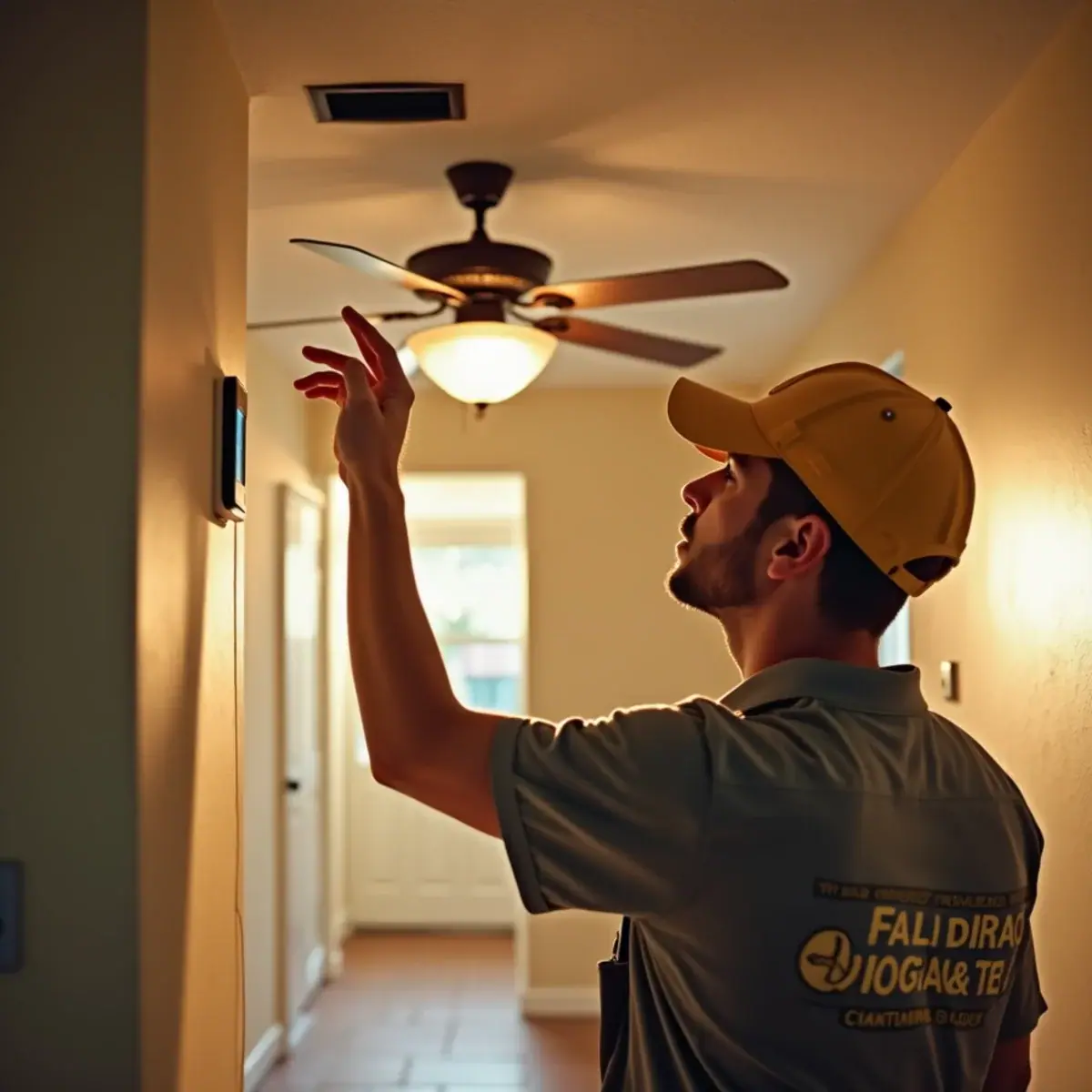
- Thermostat: Set to Cool, fan on Auto, temperature at least 3°F below the room. Replace the batteries if the display is blank or faded.
- Air filter: Pull it out. If you cannot see light through it, replace it. A clogged filter is the most common cause of frozen coils.
- Breaker: Look for a tripped double-pole breaker labeled AC, condenser or air handler. Flip it fully off, then on, one time.
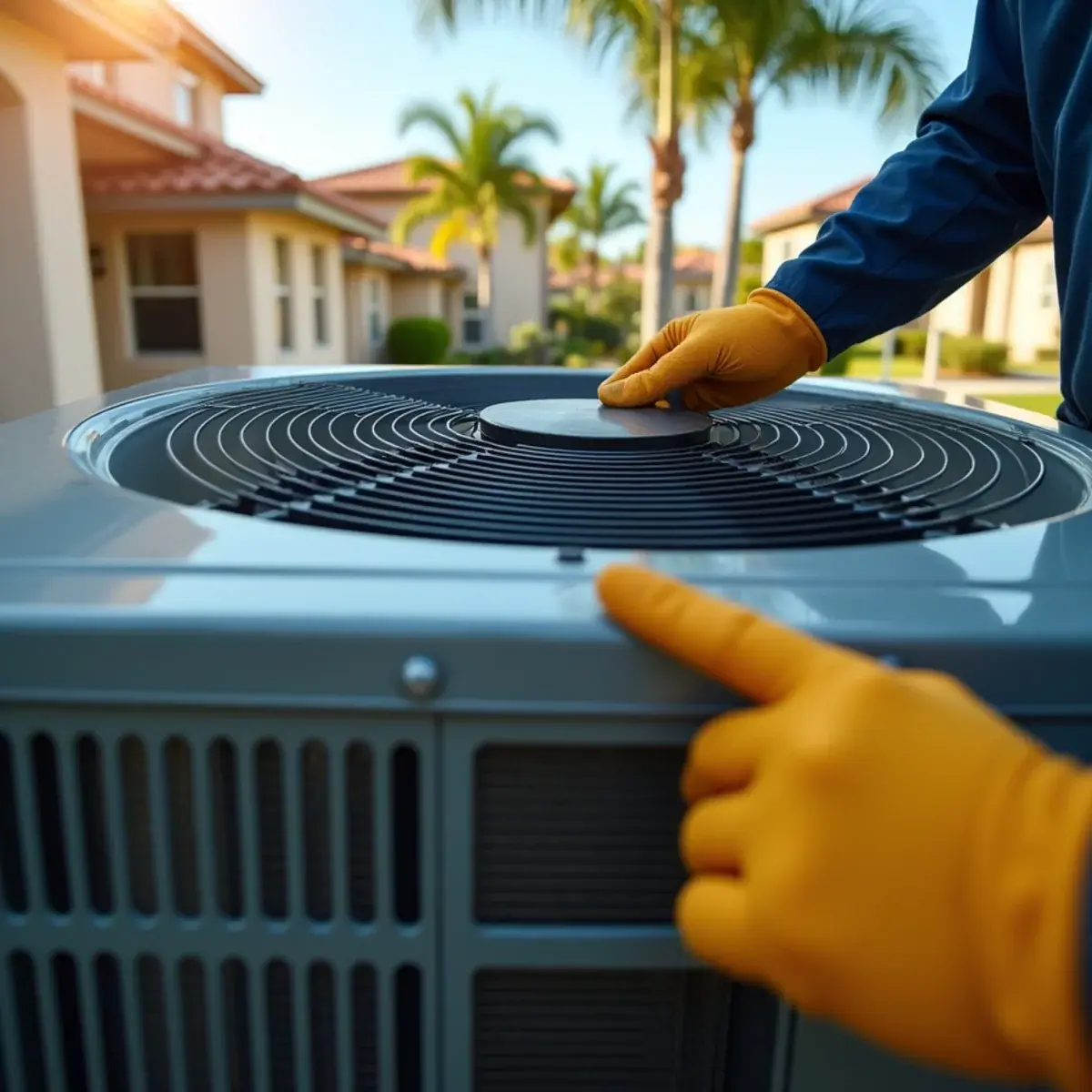
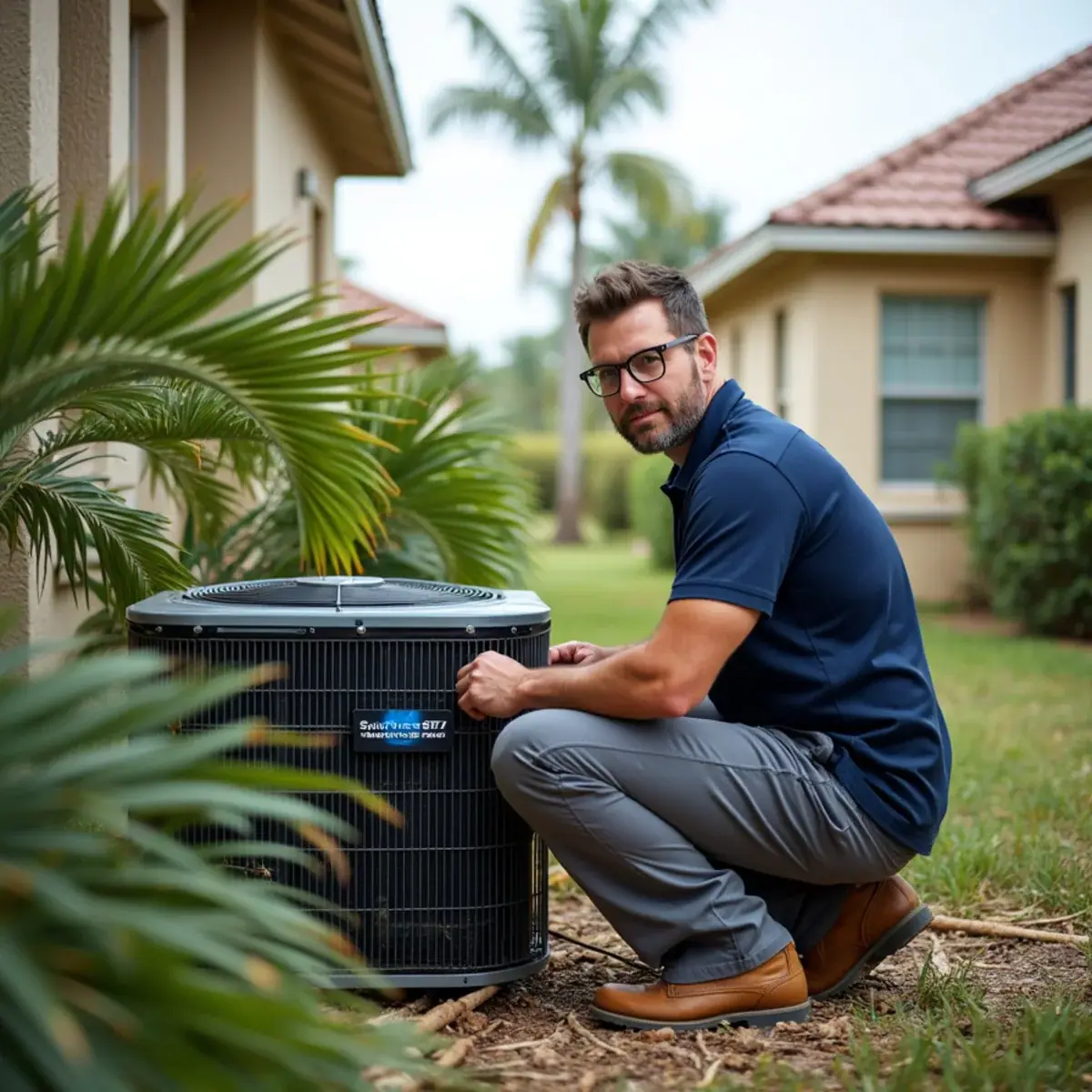
- Outdoor unit: From a few feet away, check whether the top fan is turning and listen for the compressor. Clear leaves, moss or clippings from around the cabinet without reaching inside.
- Drain and float switch: If the indoor unit is silent and there is water in the secondary pan, a tripped float switch has likely shut the system off to prevent a leak.
Keeping the House Livable While You Wait
- Close blinds and curtains on the west and south sides first; afternoon sun through sliders to the lanai adds heat fast.
- Keep interior doors to unused rooms closed and gather everyone in the coolest room, usually one on the north side.
- Run ceiling fans counterclockwise and a box fan pulling cooler air from a shaded window after sunset.
- Keep water handy and check on older neighbors, especially in seasonal communities where many homes sit empty in August.
What Happens on an Emergency Visit
Give whoever answers a clear description: what the thermostat shows, whether the outdoor fan spins, any sounds or smells, the approximate age of the system, and whether you reset a breaker. That helps the technician bring the likely parts, such as a replacement capacitor, contactor or float switch, so the fix happens on the first trip.
On site, a good tech measures before replacing anything: capacitor µF, contactor voltage, amp draw and the temperature split across the indoor coil. You should hear the diagnosis and the price before work starts. We cover homes throughout the area, from AC emergencies in Nokomis to older block homes in Venice Gardens, and many August failures can be resolved in a single visit when the common parts are on hand.
If the problem turns out to be bigger, such as a failed compressor or a major leak, you will get the honest options without pressure. For the non-urgent side of things, our AC repair service page explains how standard diagnostic visits work, and our guide to why an AC blows warm air walks through the most common causes in more detail.
What We See on August Emergency Calls Around Venice
Most August no-cool calls around Venice come down to the same short list, and the order we test in matters. We start at the outdoor unit with the power verified off, discharge and meter the run capacitor, then look at the contactor for pitting and measure the voltage it actually passes. A dual run capacitor reading more than about 6% below the rating printed on its label is a common find after a stretch of 90°F afternoons and evening lightning.
Before quoting anything, we want numbers rather than a hunch:
- Capacitor µF compared with the label rating, for both the compressor and fan sides.
- Amp draw on the compressor and condenser fan compared with the nameplate.
- Temperature split across the indoor coil, usually somewhere around 15–20°F on a healthy system in cooling.
- Condensate flow at the drain outlet and whether the float switch resets once the line is clear.
Two things slow a night repair down more than anything else. One is a frozen evaporator coil: until the ice melts, nobody can read a true charge or split, and thawing in fan-only mode can take a few hours. The other is repeated breaker resets before the call. Every forced restart against a shorted fan motor or a locked compressor adds heat and wear, and it can weld the contactor points closed.
The honest trade-off after dark is a safe temporary fix versus a full answer. If a capacitor or a cleared drain gets cold air moving again, we'll do that and tell you what still deserves a look in daylight, instead of pushing a bigger job at 11 p.m. A phone photo of the outdoor unit's model and serial plate helps us bring the right part the first time.
Get Cool Air Back Tonight
If the quick checks above did not fix it, stop troubleshooting and call (831) 461-3437. Goran and the Brothers Services Cooling & Heating team take emergency calls 24/7 across Venice and the surrounding communities. You can also request a quote online for anything that can wait until business hours.
FAQ
Common questions
How fast can someone come out for emergency AC repair in Venice?
Response depends on the time of the call and how many emergencies are already waiting. Same-day service is common when you call early, and after-hours calls are answered around the clock. You will get a realistic arrival estimate on the phone rather than a promise we cannot keep.
Should I keep running my AC if it is blowing warm air?
No. If the air from the vents is warm or the outdoor fan is not spinning, turn cooling off at the thermostat. A compressor running without airflow over the condenser, or with a frozen indoor coil, overheats quickly. Shutting it down protects the most expensive part in the system and often keeps the repair small.
Is it safe to reset the AC breaker myself?
Resetting a tripped breaker once is fine for most homeowners. Push the handle fully off, then back on. If it trips again right away or within a few minutes, leave it off. Repeated tripping points to a shorted motor, a failing compressor or a wiring fault, and forcing it can damage equipment or create a fire risk.
Does emergency AC repair cost more at night or on weekends?
It can. A night or weekend visit pulls a technician out outside normal hours, and many companies add an after-hours charge for that. Ask on the phone what the visit fee is and whether it changes after dark. We put pricing in writing before any work starts, and if your situation can safely wait until morning, we'll say so and let you choose.
Can you handle an AC emergency if I'm away from my Venice home?
Yes, as long as someone can let us in, such as a neighbor, property manager or HOA contact with a key. Seasonal owners get photos of what failed and the readings behind the diagnosis, plus a written price to approve by text or phone before we repair anything. Leaving the thermostat set around the upper 70s while you're gone also helps humidity stay under control.
About the author
Written by the team at Brothers Services Cooling & Heating, an owner-operated HVAC contractor in Venice, FL. Goran and crew repair, replace and maintain air conditioners and heat pumps across Sarasota County every day — this article reflects what we see on real Gulf Coast service calls.