Emergency
AC Fan Not Spinning and the Outdoor Unit Humming? Fan Motor Failure Explained
A humming outdoor unit with a motionless fan is one of the clearest warning signs an AC can give. Here is what is failing, why you should shut it off right away, and how the fix works.
Quick answer
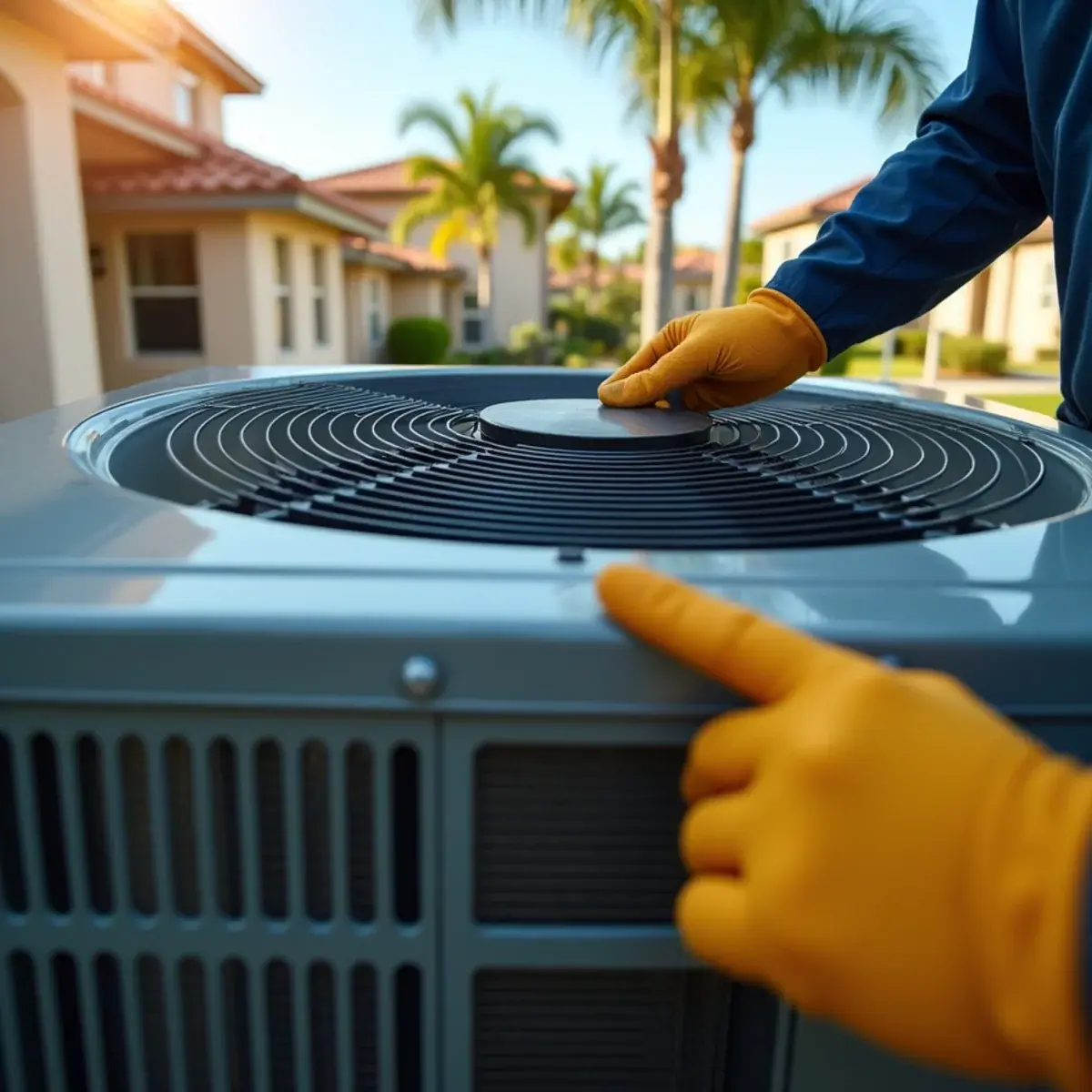
An AC fan not spinning while the outdoor unit hums usually means a failed run capacitor or a condenser fan motor with seized bearings or burned windings. Turn cooling off at the thermostat right away, because the compressor overheats without that airflow. Don't push the blade with a stick; a technician can test the capacitor and motor in minutes.
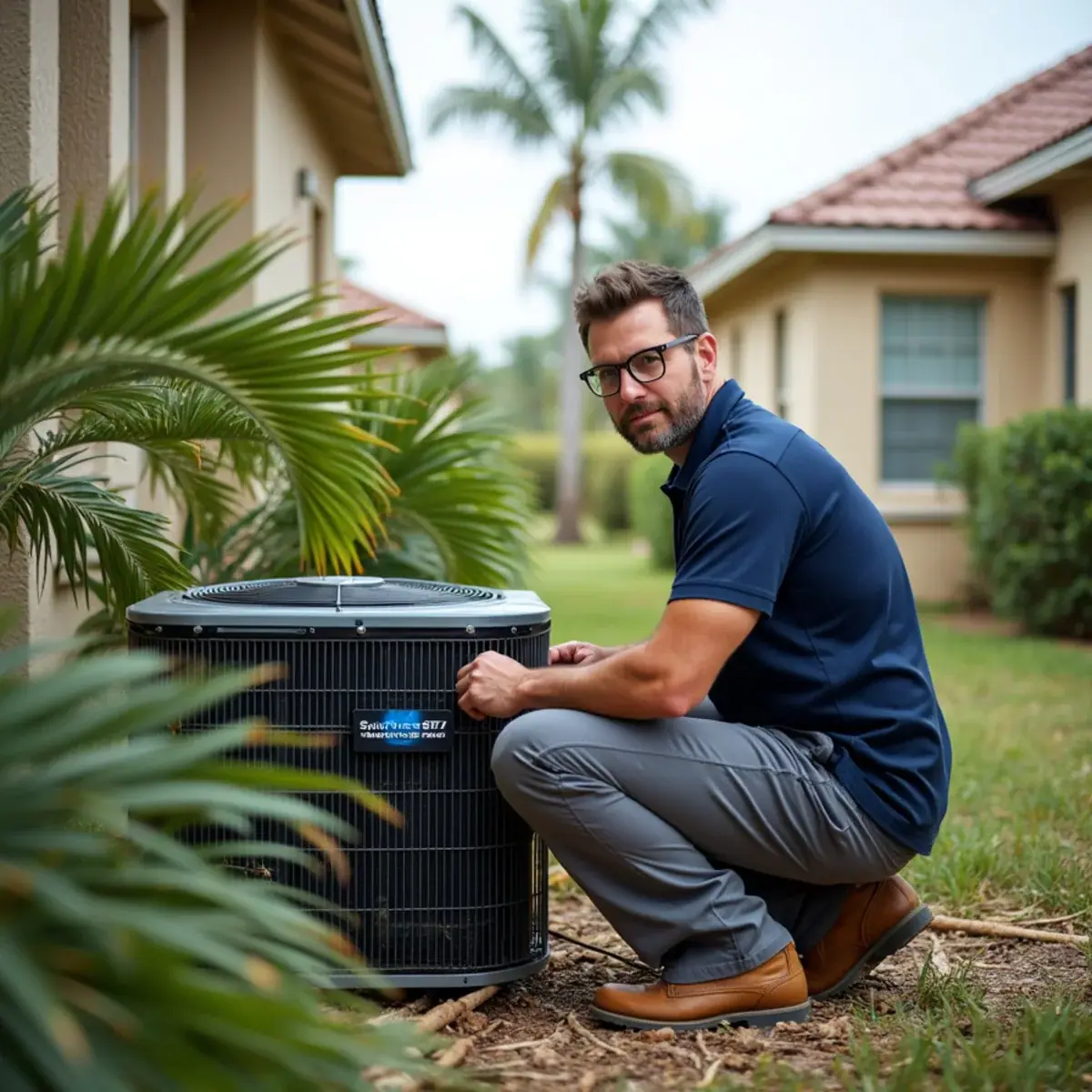
If your AC fan is not spinning but the outdoor unit is humming, the two most likely causes are a failed run capacitor or a condenser fan motor that has seized or burned out. Either way, turn the system off at the thermostat now. Without the fan pulling air through the coil, the compressor overheats within minutes, and a relatively affordable fan repair can become a compressor replacement. Do not try to spin the blades by hand or with a stick; it is dangerous and does not fix the underlying problem.
What That Hum Is Telling You
When the thermostat calls for cooling, the contactor in the outdoor unit closes and sends 240 volts to two loads: the compressor and the condenser fan motor. The hum you hear is usually one of them energized but not turning. Sometimes the compressor is running normally and the fan is dead. Sometimes both are stuck because the shared dual capacitor has failed. The difference matters, and a technician can tell in a few minutes with a meter.
Cause 1: A failed run capacitor
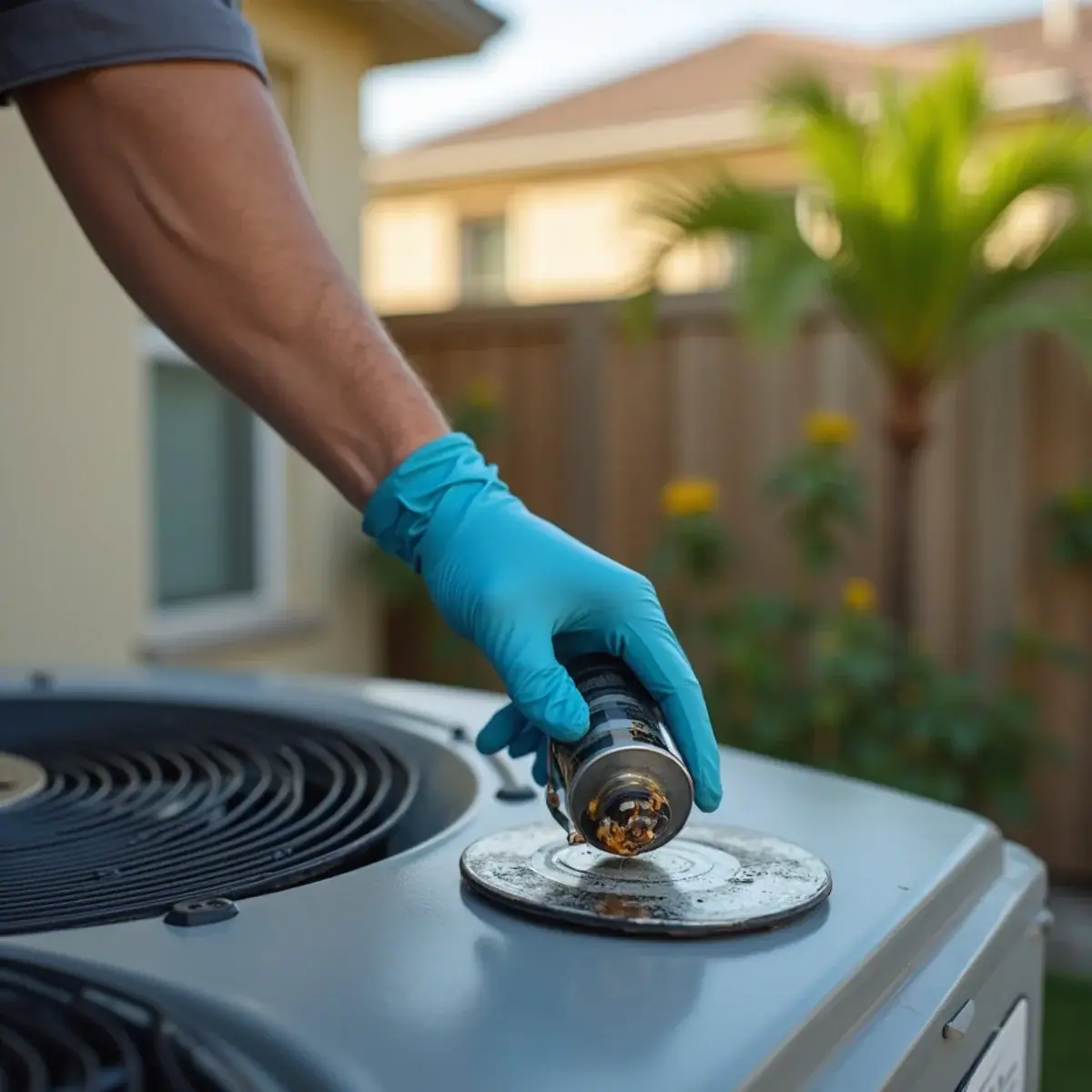
Most residential condensers use a dual run capacitor with one section for the compressor and one for the fan. Heat, age and power surges gradually reduce its capacitance until the fan motor no longer has enough phase shift to start. A bulged or leaking top is a telltale sign, but plenty of weak capacitors look perfectly normal. The tech tests it against its rated µF value; a reading well below spec means replacement.
Cause 2: Worn or seized motor bearings
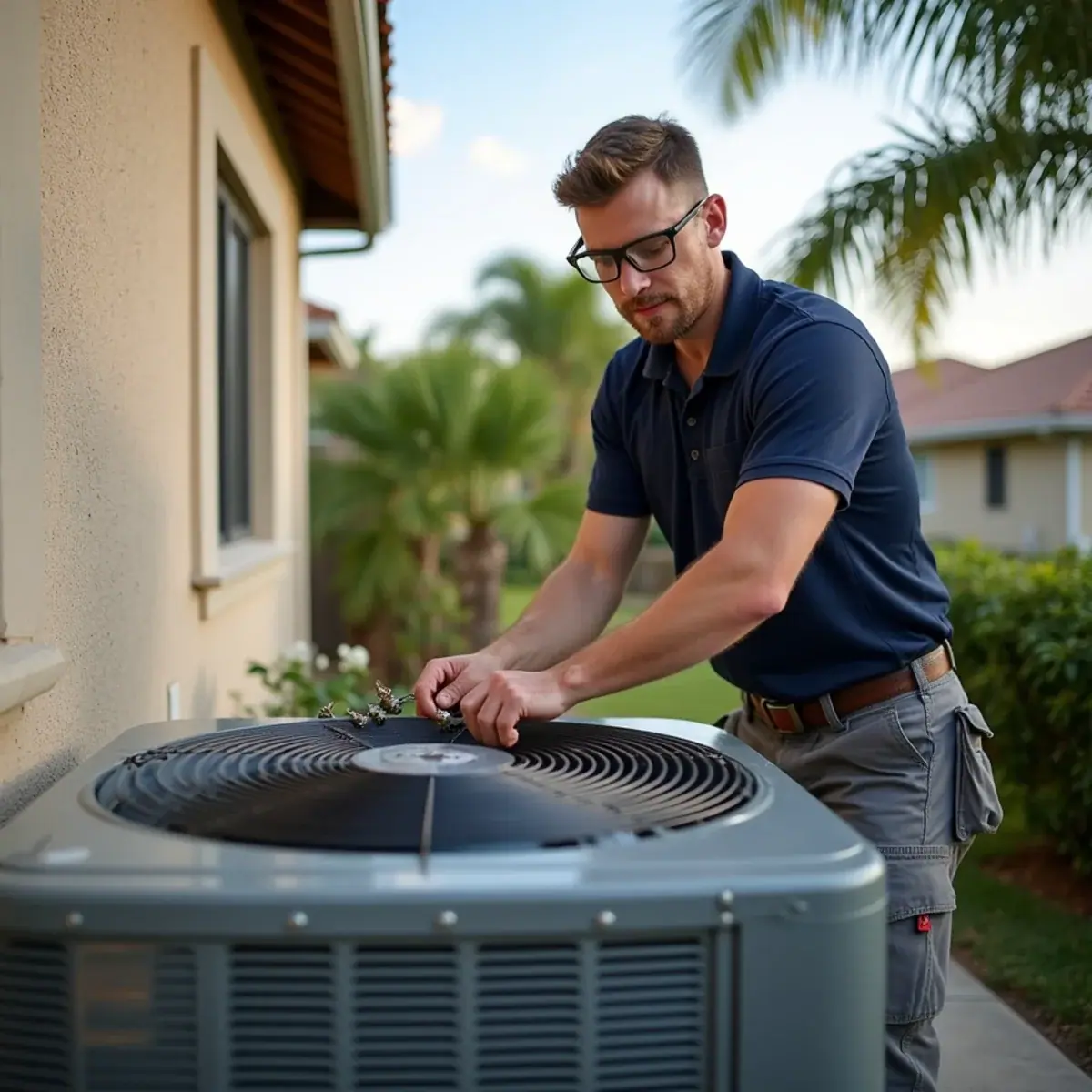
Condenser fan motors run thousands of hours a year in Southwest Florida. As the bearings dry out, the motor gets noisy, then sluggish, then locks. If the blade is hard to turn or makes a grinding noise, the bearings are finished. Replacing a capacitor alone on a seized motor only buys a few days at best.
Cause 3: Burned windings or thermal overload
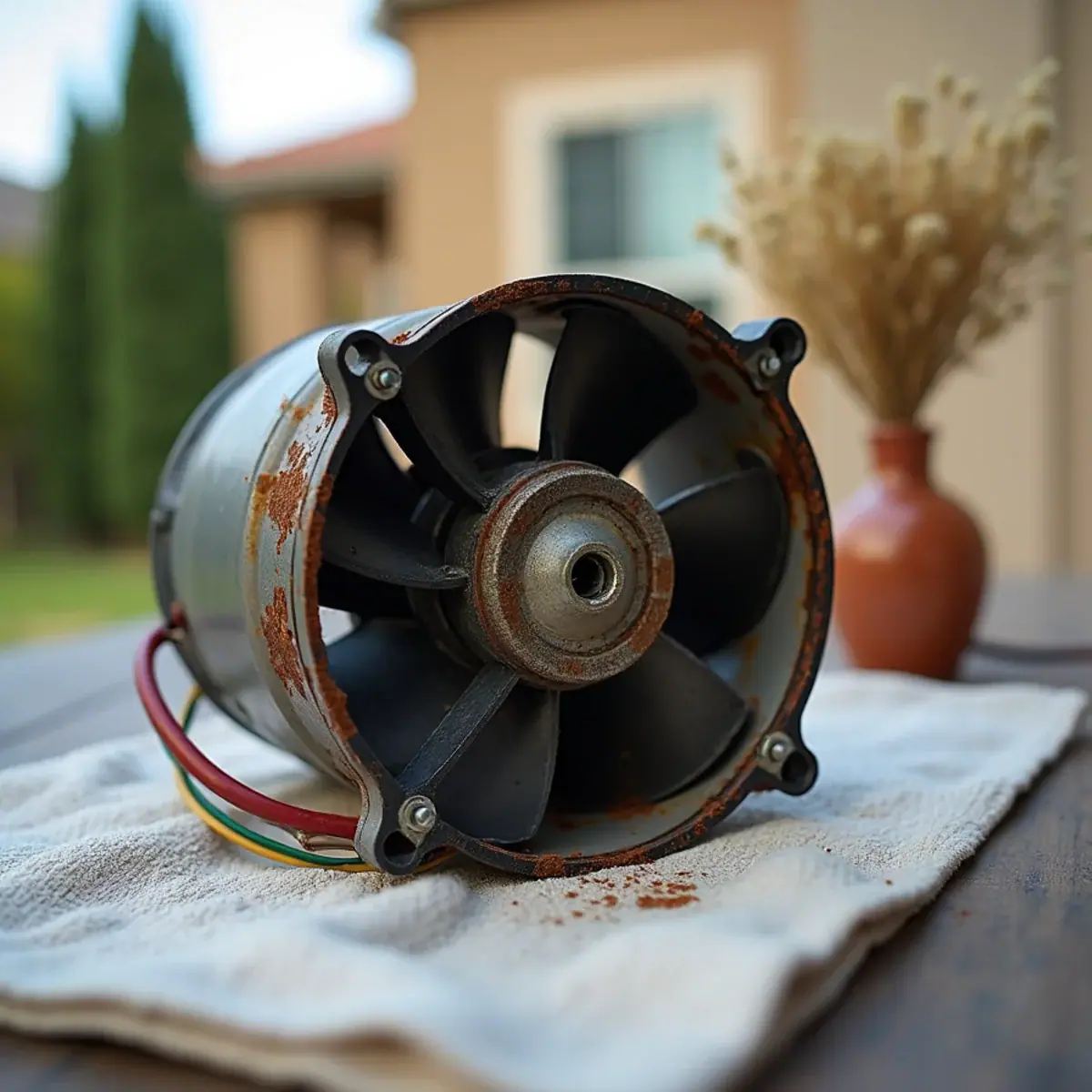
A motor that has been straining against bad bearings or a weak capacitor overheats. Its internal thermal protector may shut it off and reset repeatedly, so the fan runs for a while, stops, and restarts. Eventually the windings short. Burned windings often leave a sharp electrical smell near the unit.
Cause 4: Contactor or wiring problems
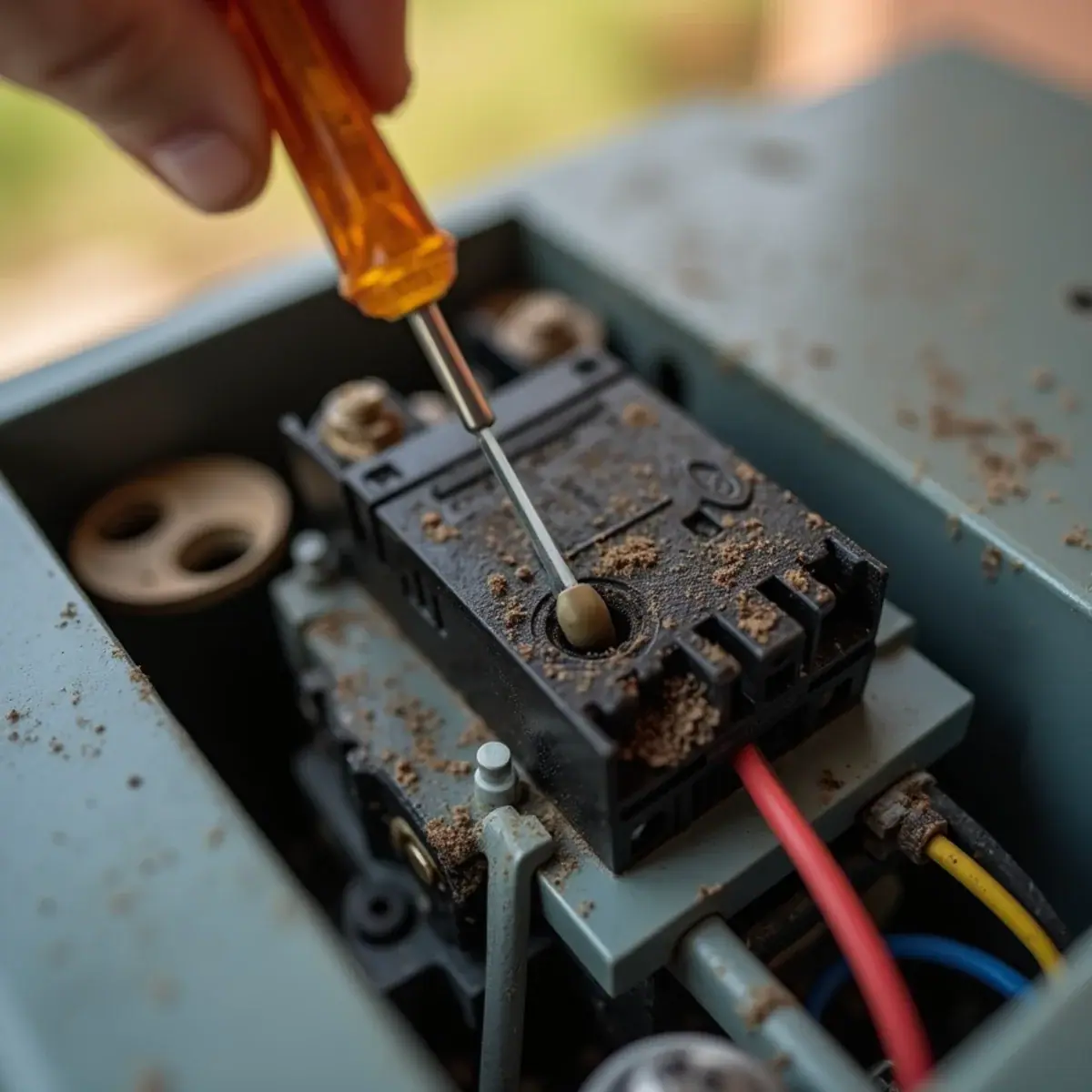
Pitted contacts, a chewed wire from a rodent, or a loose connection corroded by salt air can starve the fan motor of voltage. These are less common than capacitor or motor failures but show up regularly in older coastal installations.
What You Can Safely Check
- Turn cooling off at the thermostat to protect the compressor.
- Look at the outdoor unit from a few feet away. Is anything lodged in the fan grille, such as a palm frond, a branch or a toy?
- Check the breaker panel for a tripped AC breaker and reset it once if needed.
- Replace the indoor filter if it is dirty, since restricted airflow adds strain on the whole system.
- Note any smells, noises and whether the fan ever starts on its own, then call a technician with those details.
How a Fan Motor Repair Works
A proper AC fan motor replacement starts with confirming the failure: capacitor readings, voltage at the motor leads, amp draw and a bearing check. If the motor is bad, the technician matches horsepower, RPM, rotation direction, voltage and shaft size, then installs the new motor with a fresh capacitor matched to its rating. The fan blade is checked for balance and cracks and set at the right height in the shroud so it moves the rated airflow.
Before leaving, the tech should run the system and confirm normal head pressure and compressor amp draw. If the compressor ran hot for a long time before you noticed the problem, it is worth checking that it came through without damage. Our breakdown of compressor replacement cost and repair-or-replace decisions explains what happens when it did not.
Ronald B. called us when his fan motor went out during the hottest stretch of the year, and he noted that we responded quickly and communicated every step at a reasonable price. That is the standard every fan call should meet.
If It's the Indoor Blower That Won't Spin
Some searches for a fan that won't spin are really about the indoor unit. If the outdoor unit runs but no air comes out of the vents, the problem is the blower in the air handler, which usually sits in a closet, the garage or the attic. The usual suspects there differ from the outdoor side:
- Blower motor or its capacitor. Older PSC blower motors use their own run capacitor, and a weak one produces the same hum-without-turning you hear outdoors.
- ECM motor module. Newer variable-speed blowers carry an electronic module on the motor that can fail after a surge even when the windings are fine.
- Control board or float switch. A blown low-voltage fuse or a tripped float switch can shut the system down, blower included, depending on how it's wired.
- A blower wheel caked with dust. A clogged filter lets dirt pack the wheel's blades, so the motor turns but moves almost no air.
Turn cooling off if the vents go silent. An outdoor unit running with no indoor airflow freezes the evaporator coil quickly. Our AC not cooling repair visit covers blower diagnosis as well as the outdoor side.
Why Coastal Units Lose Fan Motors Sooner
Near the Gulf and Lemon Bay, salt air settles into motor housings, fan blade hubs and electrical terminals. Corroded terminals raise resistance, which adds heat and shortens motor life. Homes on canal lots and near the beaches in Englewood AC repair territory often see fan motors and capacitors wear out years ahead of units farther inland.
- With the thermostat off, gently rinse salt film from the outdoor coil with a garden hose a few times a year; never use a pressure washer.
- Keep shrubs and sprinklers away from the cabinet.
- Ask about salt-air coil protection coatings for units within sight of salt water.
- Schedule a yearly check so a weak capacitor gets replaced before it takes the motor with it.
What We Check Before Condemning a Condenser Fan Motor
Most residential condenser fans around Venice are PSC motors somewhere in the 1/6 to 1/3 horsepower range, turning about 825 or 1,075 RPM, with a fan-side capacitor of just a few microfarads. Because the capacitor is cheap and the motor isn't, we prove which one failed before swapping anything.
- Spin-down test. With power off and the capacitor discharged, a healthy blade coasts for several turns after a push. One that stops almost at once, or feels gritty, has bearings that are done.
- Capacitor against its label. A capacitor can read close to spec when cool and weaken once it's hot, so we test it after the unit has been running and compare the reading with the label value, not just whether it reads at all.
- Amp draw against the motor's label. A motor pulling above its rated full-load amps with a good capacitor is dragging internally and won't last the summer.
Coastal installs add time. Salt air seizes the set screw that holds the blade to the motor shaft, and on older units the blade sometimes has to be cut free rather than slid off. That's also when we check the blade for cracks and wobble, because a new motor paired with a bent blade fails early.
The trade-off worth knowing is universal versus factory motors. A universal replacement is widely available and can often go in the same day, provided the horsepower, RPM, rotation and frame match. Variable-speed condensers with ECM fan motors usually need the exact factory part, which can mean ordering it. After a long run with the fan dead, the compressor's internal overload may also need an hour or more to cool and reset before we can confirm it survived.
Get the Fan Turning Again
A humming unit with a still fan will not fix itself, and every hour it runs puts the compressor at risk. Turn it off and call (831) 461-3437 to reach Goran and the Brothers Services Cooling & Heating team, or request a quote online. For general breakdowns, our AC repair service page explains what a diagnostic visit includes.
FAQ
Common questions
Can I run my AC if the outdoor fan is not spinning?
No. The condenser fan removes heat from the refrigerant. Without it, head pressure and compressor temperature climb rapidly, and the compressor may trip on overload or suffer permanent damage. Turn cooling off at the thermostat and leave it off until the fan is repaired. Running the indoor fan alone is fine if you want air circulation.
Is it the capacitor or the fan motor?
You cannot tell safely from the outside. A capacitor that reads below its rated microfarads is the more common and less expensive failure, but a motor with seized bearings or burned windings will not run even with a new capacitor. A technician tests both with a meter and checks whether the shaft turns freely before recommending a part.
How long do condenser fan motors last in Florida?
Many last ten years or more, but heavy year-round runtime, salt air and weak capacitors shorten that. Coastal units and systems that have run with a failing capacitor for a while tend to lose motors earlier. Replacing a weak capacitor during routine maintenance is one of the simplest ways to protect the motor.
Why is my AC fan spinning slowly?
A fan that turns sluggishly, or takes a while to reach speed, is usually running on a weak capacitor or fighting worn bearings. Low voltage at the unit and a mismatched replacement motor are less common causes. A slow fan moves less air across the condenser coil, so head pressure climbs and the compressor runs hotter. Have it checked before it stops completely.
Is a humming outdoor unit dangerous?
The hum itself isn't a fire alarm, but it means a motor is energized and not turning, which draws heavy current and heats the windings fast. Left that way, it can burn out the fan motor, trip the compressor on overload or damage wiring. Turn cooling off at the thermostat. If you also smell burning or see scorch marks, switch off the AC breaker and call.
About the author
Written by the team at Brothers Services Cooling & Heating, an owner-operated HVAC contractor in Venice, FL. Goran and crew repair, replace and maintain air conditioners and heat pumps across Sarasota County every day — this article reflects what we see on real Gulf Coast service calls.