Emergency
AC Blowing Warm Air? 7 Causes Florida Homeowners Should Check First
Warm air from the vents almost always comes down to one of seven causes. Here is how to narrow it down in minutes, what you can safely check yourself, and which problems need a technician.
Quick answer
An AC blowing warm air in Florida is usually caused by a thermostat set to Heat or fan On, a clogged filter that froze the coil, a tripped outdoor breaker, a failed capacitor, low refrigerant from a leak, a dirty condenser coil, or a tripped float switch. Check the first three yourself; call a technician for the rest.
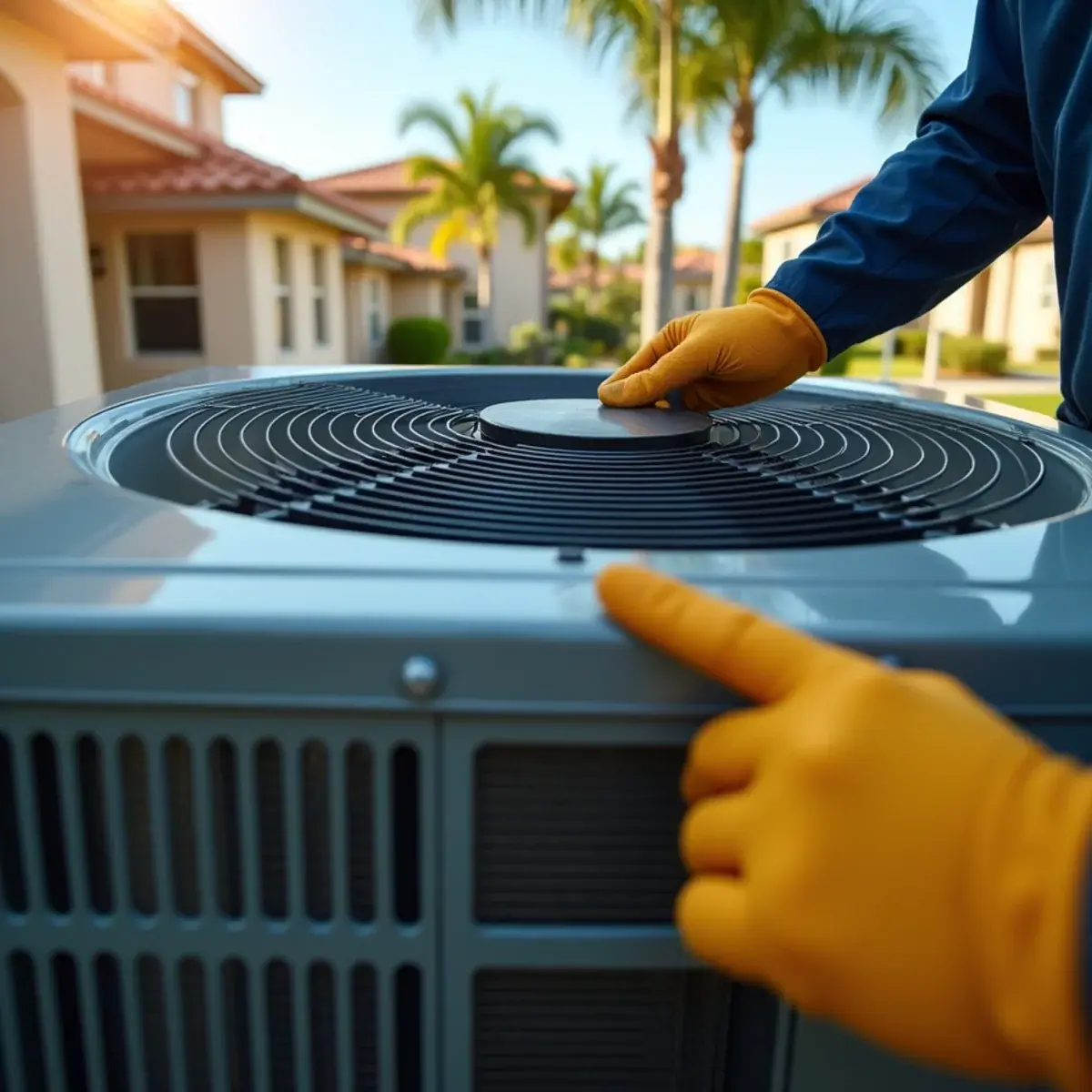
An AC blowing warm air in Florida usually means one of two things: the outdoor unit is not doing its job, or air is not moving across the indoor coil the way it should. Start by walking outside while the system is calling for cooling. If the big top fan is still and the unit is silent or humming, the problem is outdoors. If the outdoor unit is running normally but the vents feel lukewarm, look indoors first: the thermostat, the filter and the coil.
Below are the seven causes we see most often, in rough order from easiest to check to most technical. The table at the end summarizes which ones are safe DIY checks and which need a professional AC not cooling repair.
1. The Thermostat Is Set Wrong or Losing Power
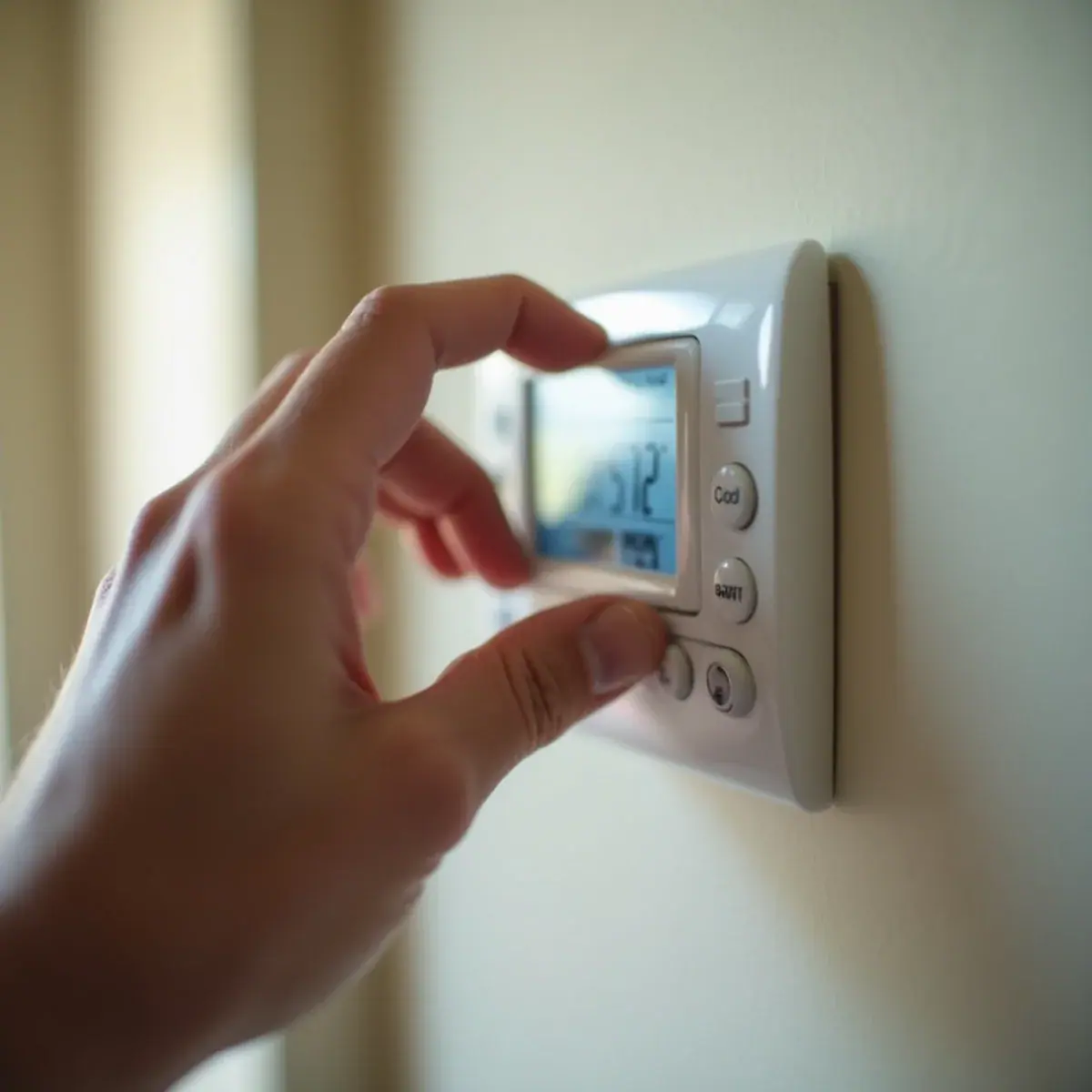
It sounds too simple, but a thermostat accidentally switched to Heat or Emergency Heat, or a fan set to On instead of Auto, causes a surprising number of warm-air calls. With the fan on continuous, the blower keeps moving air even when the compressor cycles off, and that air feels warm and muggy. Also check for dead batteries or a blank screen; some thermostats lose their settings when batteries fail.
2. A Clogged Filter Has Frozen the Coil
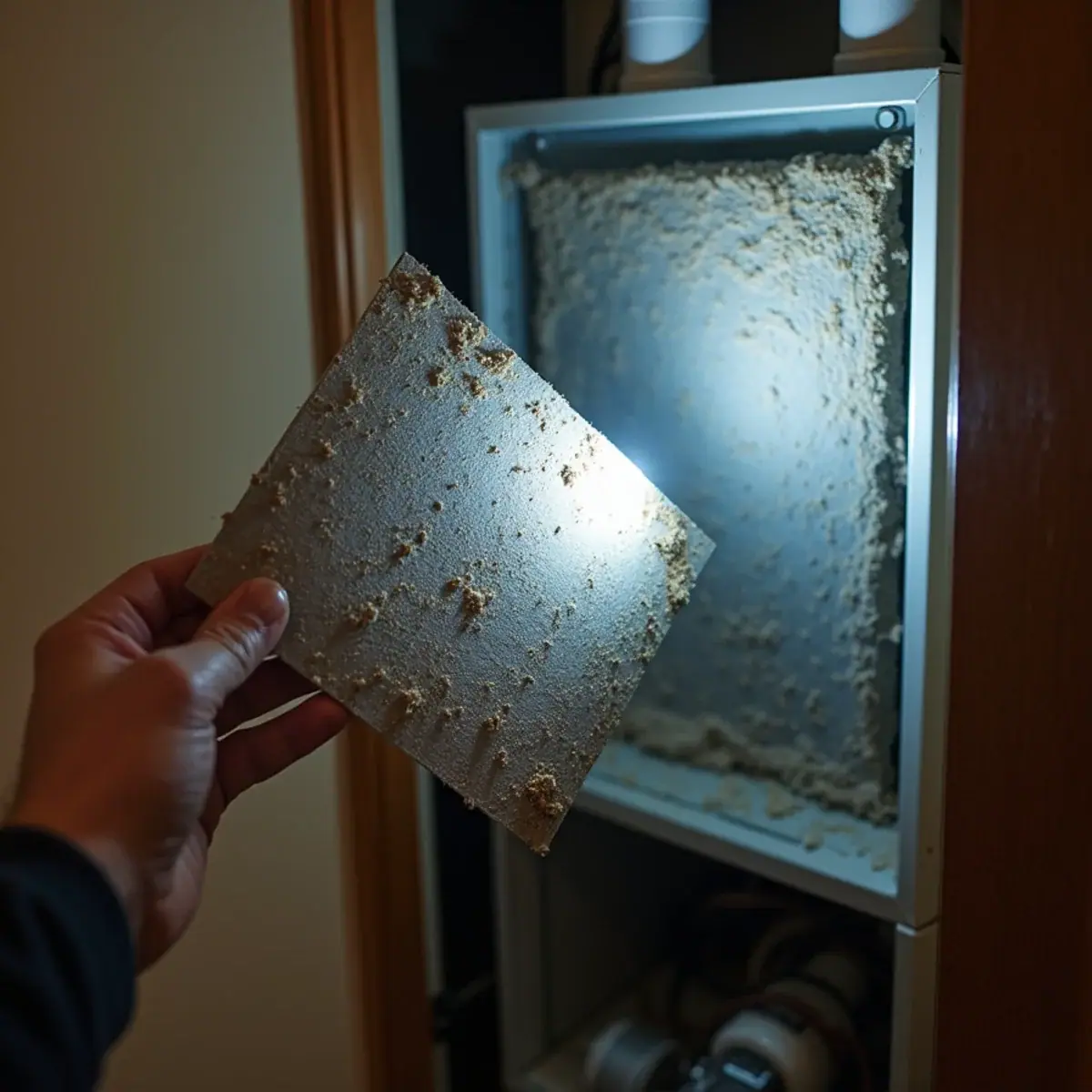
In a humid climate, a dirty filter starves the evaporator coil of airflow. The coil drops below freezing, humidity turns to ice, and the ice blocks even more air. Eventually the vents push out a weak stream of air that is barely cool. Look for frost on the copper suction line at the air handler or water pooling as ice melts.
Replace the filter, turn cooling off, and run the fan alone for two to three hours to thaw the coil. If it freezes again after a day, the filter was not the only issue, and low charge is the next suspect.
3. The Outdoor Unit Has No Power
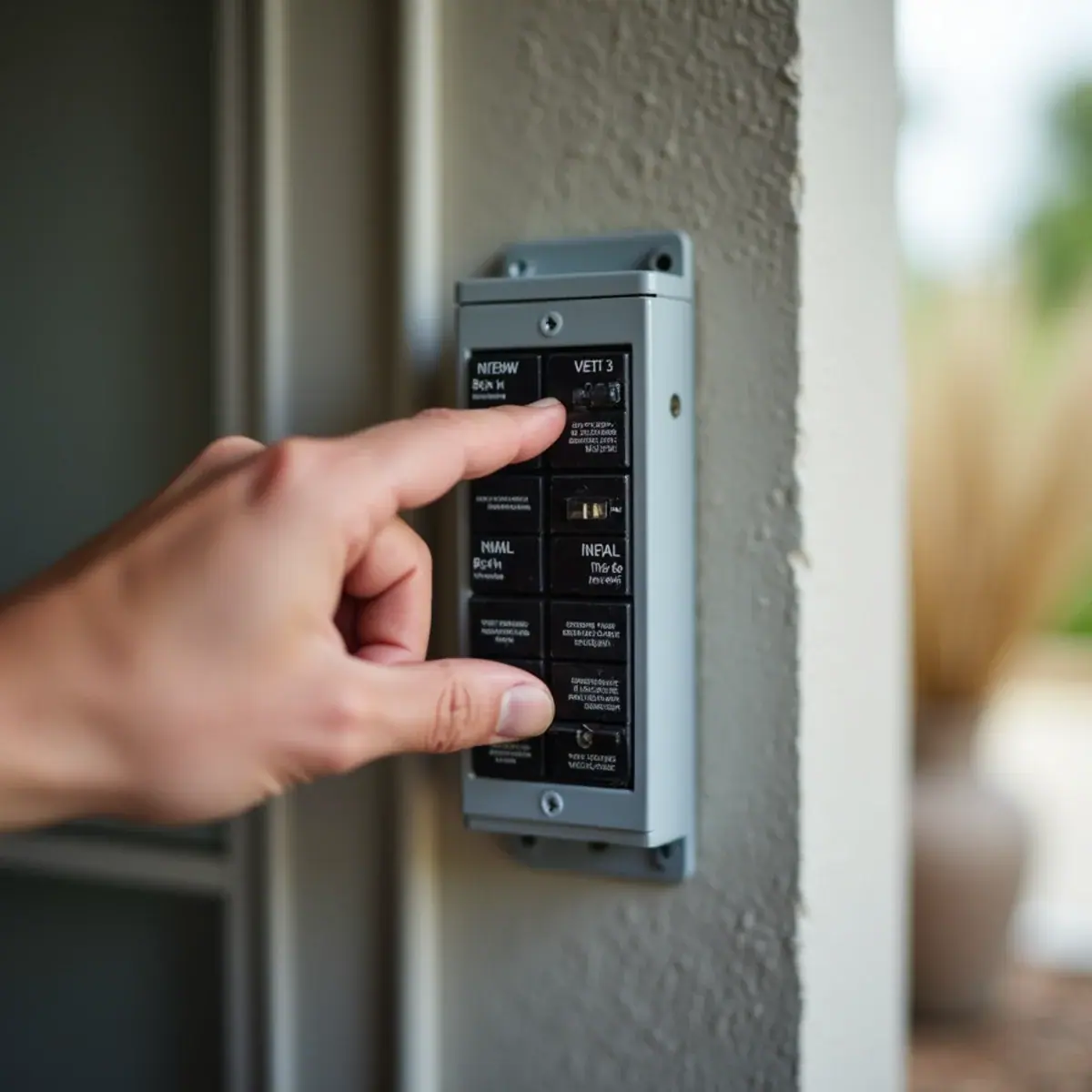
The indoor blower and the outdoor condenser are usually on separate breakers. If the condenser breaker trips, the indoor fan keeps running and blows room-temperature air through the vents. Check the panel for a tripped AC or condenser breaker and reset it one time. If it trips again, leave it off. That pattern points to a shorted compressor, a failing fan motor or a wiring fault.
4. A Weak Capacitor or Bad Contactor
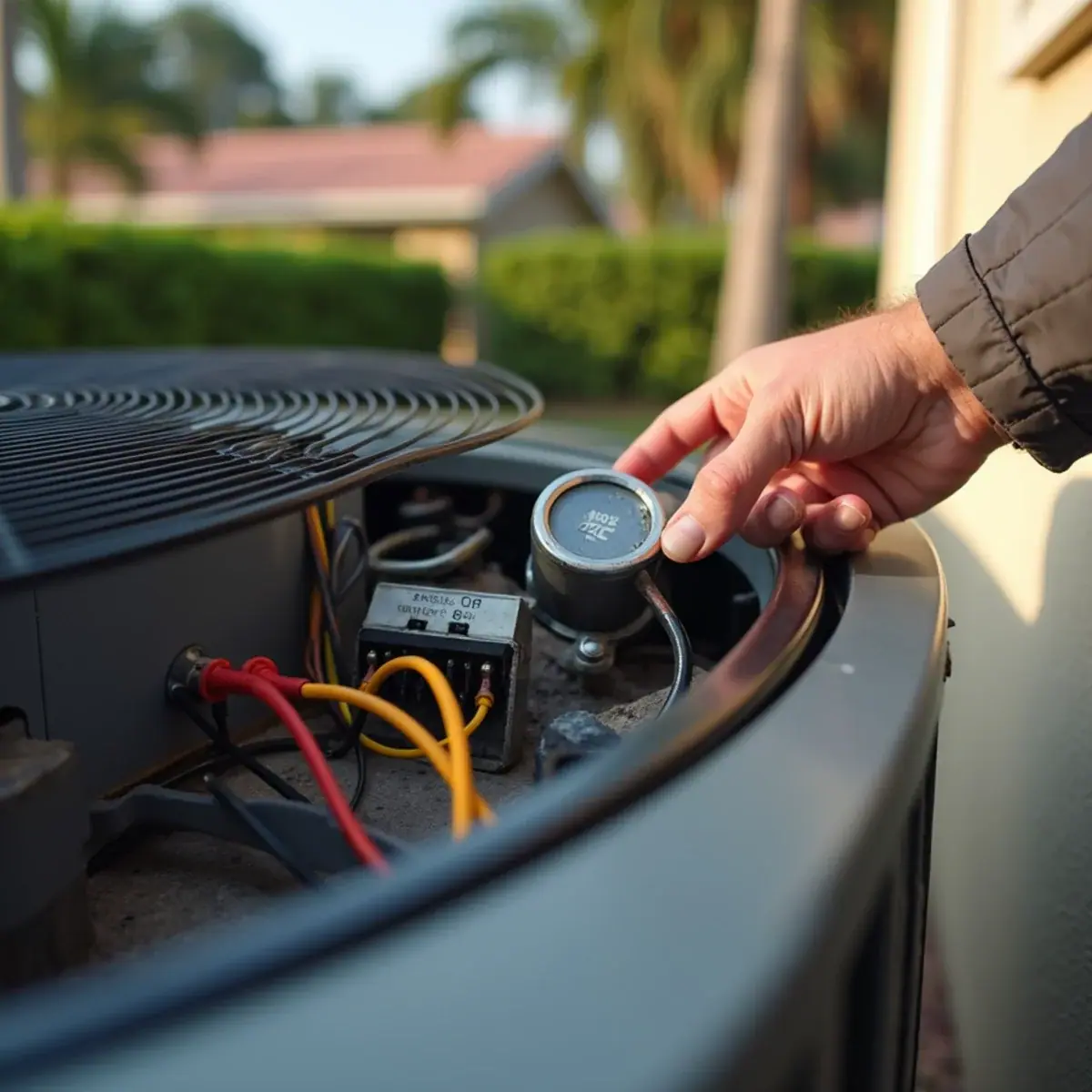
This is the most common repair behind warm air in a Southwest Florida summer. The run capacitor gives the compressor and outdoor fan motor the boost they need to start. Heat and surges from afternoon storms wear capacitors down until they read well below their rated µF. The contactor, the switch that sends power to the condenser, can pit and stick from the same surges.
Symptoms include a humming outdoor unit, a fan that does not spin, or a compressor that clicks on and off. These parts are inexpensive, but they carry high voltage and stored charge, so this one is strictly for a technician.
5. Low Refrigerant From a Leak
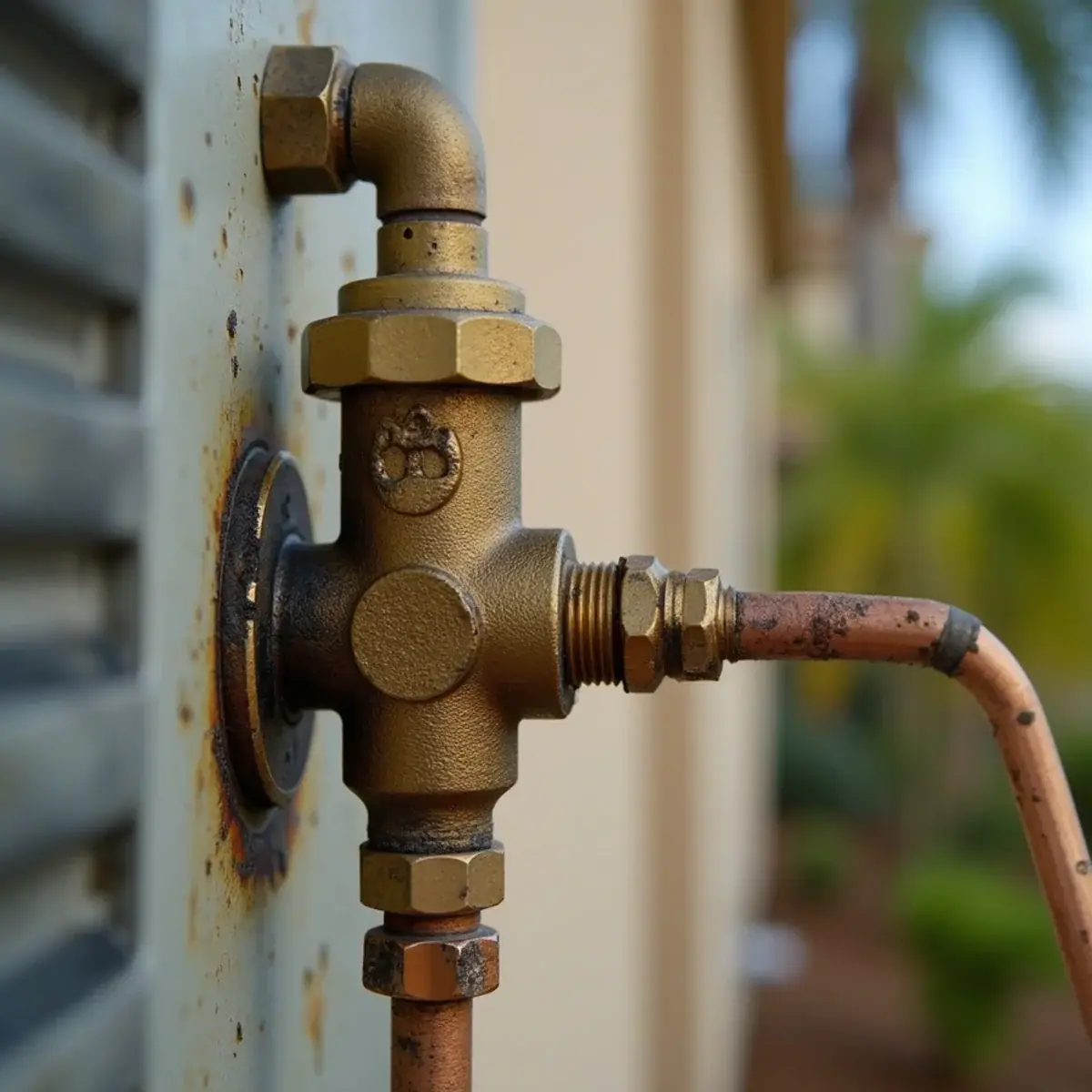
Refrigerant does not get used up. If the charge is low, there is a leak, often at a flare fitting, a Schrader valve, or a copper evaporator coil pitted by formicary corrosion. Signs include a long run time with lukewarm air, ice on the lines, and a hissing or bubbling sound. Topping off without finding the leak just delays the next breakdown. Proper refrigerant leak and frozen coil repair means locating the leak, fixing it, pulling a vacuum and charging by superheat or subcooling.
6. A Dirty or Blocked Condenser Coil
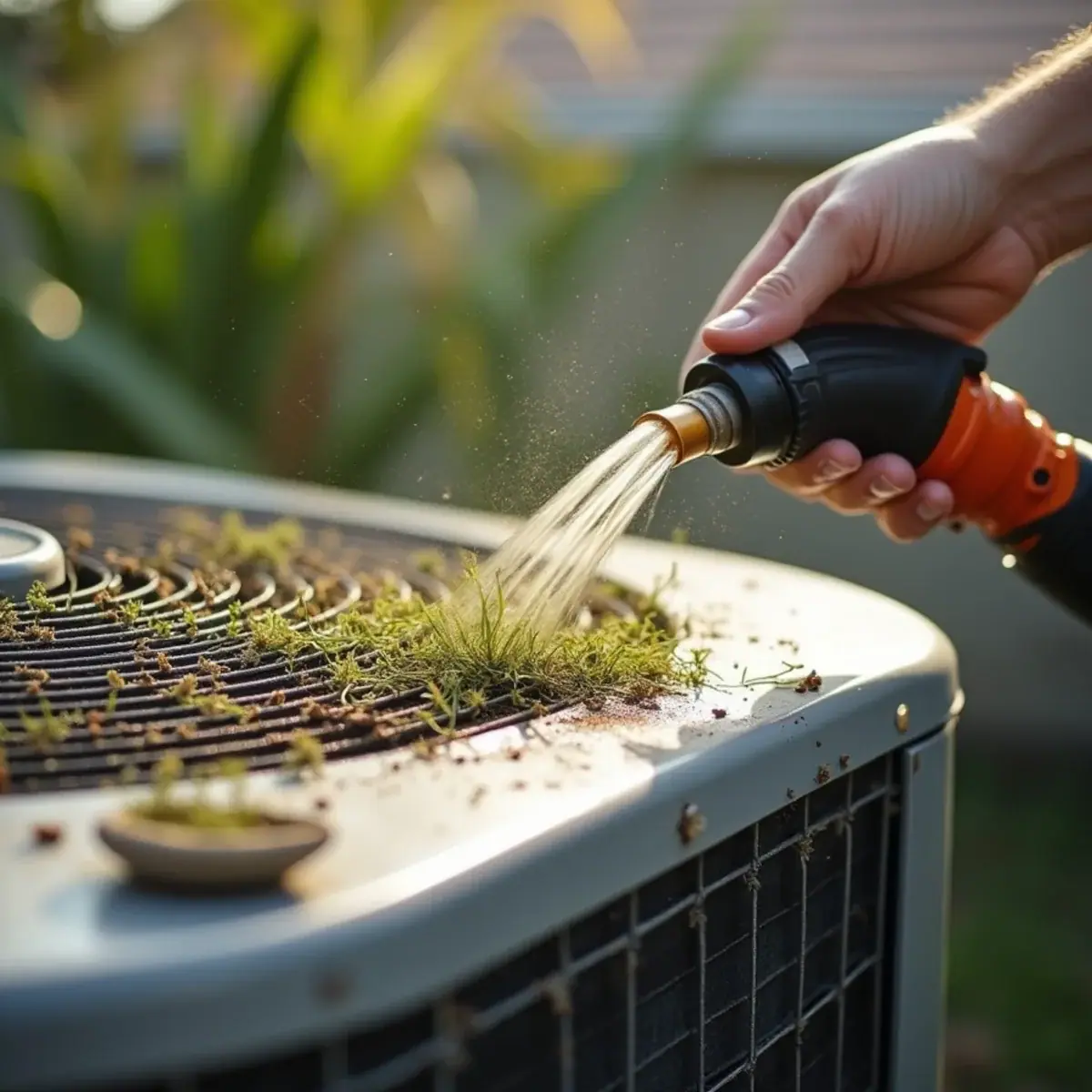
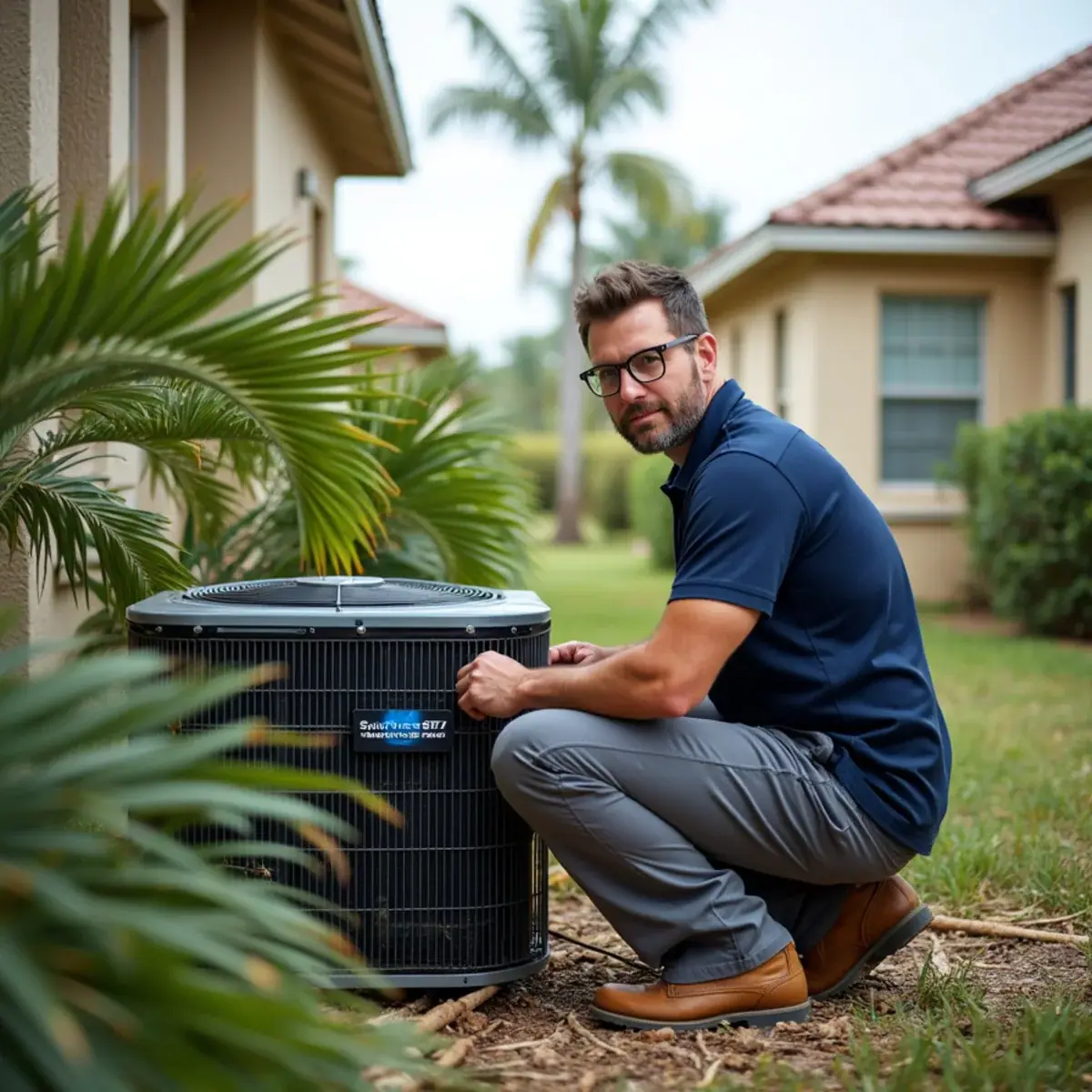
The outdoor coil rejects the heat pulled out of your house. When its fins are matted with love bugs, grass clippings, dryer lint or oak pollen, heat cannot escape. Head pressure climbs, the compressor overheats, and the air inside gets warmer each afternoon. Irrigation overspray from well water can also leave mineral scale on the fins.
- Keep two feet of clearance around the cabinet and three to five feet above it.
- Point irrigation heads away from the unit.
- Ask lawn crews to blow clippings away from the condenser, not into it.
- Leave deep coil cleaning to a technician; high-pressure washers flatten aluminum fins.
7. The Float Switch Tripped or the Ducts Are Leaking
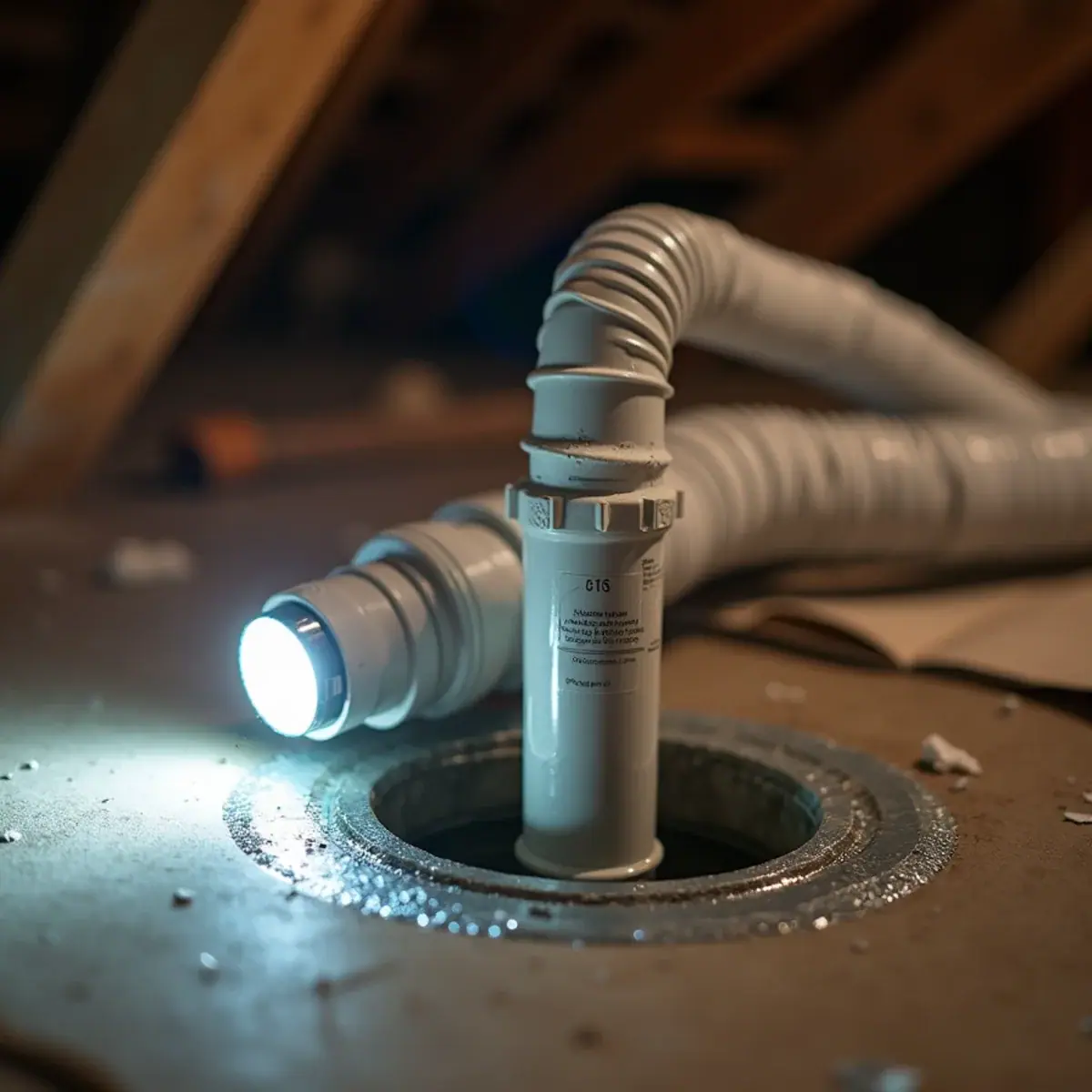
Many Florida systems have a float switch in the drain pan or condensate line. When algae clogs the drain, the switch cuts the cooling call, and depending on how it is wired, the blower may keep moving warm air. Water in the secondary pan is the giveaway. Separately, a disconnected or crushed duct in a hot attic can pull 130°F air into the return or dump cooled air into the attic, so one or two rooms blow warm while others feel fine.
In older neighborhoods like South Venice, where many homes date back decades and ductwork has been patched more than once, leaky ducts are a frequent culprit. If you live there, our page on AC service in South Venice covers what we typically find in those homes.
| Cause | Typical clue | Safe to check yourself? |
|---|---|---|
| Thermostat settings | Fan set to On, mode set to Heat | Yes |
| Clogged filter / frozen coil | Frost on lines, weak airflow | Yes: replace filter, thaw coil |
| Tripped condenser breaker | Indoor fan runs, outdoor unit silent | Yes: reset once only |
| Capacitor or contactor | Humming, fan not spinning | No: high voltage |
| Refrigerant leak | Long cycles, icing, hissing | No: licensed repair required |
| Dirty condenser coil | Matted fins, hot discharge air | Clear debris only |
| Float switch or duct leak | Water in pan, one room warm | Look only; repair needs a tech |
Heat Pump Owners: Rule Out the Reversing Valve
Plenty of Venice-area homes cool with a heat pump rather than a straight AC, and a heat pump adds one more way to blow warm air in July. A reversing valve in the outdoor unit flips the refrigerant flow between heating and cooling. If its solenoid coil fails or the valve sticks partway, the system runs hard while delivering lukewarm or even warm air. We also see it right after a thermostat swap. Heat pumps use an O or B terminal to tell the valve which mode to take, and a new thermostat configured for the wrong one will heat when you ask it to cool.
Check the thermostat's heat pump setup screen first. A stuck valve or a failed solenoid coil is a technician's job, and our heat pump repair service covers the rest of the system.
Preventing the Next Warm-Air Surprise
Most of these failures show warning signs weeks ahead: a capacitor reading low, a drain line starting to slow, a coil losing efficiency. A spring and late-summer AC maintenance visit catches them before they strand you on a 92°F afternoon.
How We Pin Down Warm Air on a Service Call
Warm air has a dozen possible causes, so the first ten minutes of a visit go to readings, not part swaps. We measure air temperature at a return grille and again where the return enters the air handler. If the air handler reads several degrees warmer than the grille, a return leak in the attic is pulling hot air into the system, and no amount of refrigerant will fix that.
Outdoors, we compare compressor amp draw with the rated load amps on the nameplate and read superheat and subcooling together. That pairing separates a leak from a restriction or a worn compressor. A low charge usually shows high superheat with low subcooling. A compressor that runs but no longer pumps tends to pull low amps, with suction and discharge pressures sitting unusually close together.
These are the mistakes we run into most around Venice:
- Refrigerant added every summer without anyone searching for the leak. The charge escapes again, and on older R-410A and R-22 systems every top-off gets more expensive.
- A capacitor replaced three times when the real problem is a pitted contactor, or a compressor pulling high amps that keeps cooking new capacitors.
- A smart thermostat installed without a common wire or with the wrong heat pump setting, which causes intermittent warm air that looks like a mechanical fault.
Tell us what the vents feel like, whether the outdoor fan spins and when the problem started. With those three answers, we can often narrow the list before we pull into the driveway.
Need Cold Air Back Today?
If you have checked the thermostat, filter and breaker and the air is still warm, turn cooling off and call (831) 461-3437. Brothers Services Cooling & Heating will diagnose the real cause and explain the fix in plain terms, or you can request a quote online.
FAQ
Common questions
Why is my AC blowing warm air but the outdoor unit is running?
If the condenser fan and compressor are both running but the air is warm, the most likely causes are low refrigerant from a leak, a frozen evaporator coil, a badly dirty outdoor coil, or a failing compressor that runs without pumping properly. A technician checks pressures, superheat and amp draw to tell these apart. Check your filter first, since it is the one cause you can fix yourself.
Can I just add refrigerant to fix warm air?
No. Refrigerant is a closed loop, so low charge always means a leak. Adding refrigerant without repairing the leak wastes money, and overcharging can damage the compressor. Refrigerant handling also requires proper training and equipment. A technician should locate the leak, repair it, evacuate the system and weigh in the correct charge.
Why is my AC blowing warm air after a power outage?
Many thermostats and outdoor units hold the compressor off for a few minutes after power returns, so warm air for the first five minutes is normal. If it continues, check whether the thermostat reset to Heat or lost its settings, then look for a tripped condenser breaker. Storm outages often bring surges that finish off a weak capacitor or contactor, and those need a technician.
How long should my AC take to blow cold air after it starts?
Once the compressor kicks on, the air at a supply vent near the air handler should feel noticeably cool within a few minutes. On a healthy system that air typically runs roughly 15–20°F colder than the air entering the return. If ten minutes pass and the difference is only a few degrees, something is limiting cooling, and a diagnostic visit is worth scheduling.
About the author
Written by the team at Brothers Services Cooling & Heating, an owner-operated HVAC contractor in Venice, FL. Goran and crew repair, replace and maintain air conditioners and heat pumps across Sarasota County every day — this article reflects what we see on real Gulf Coast service calls.